Preparing Your Roof for Winter: Essential Tips for Homeowners and Businesses in Baltimore
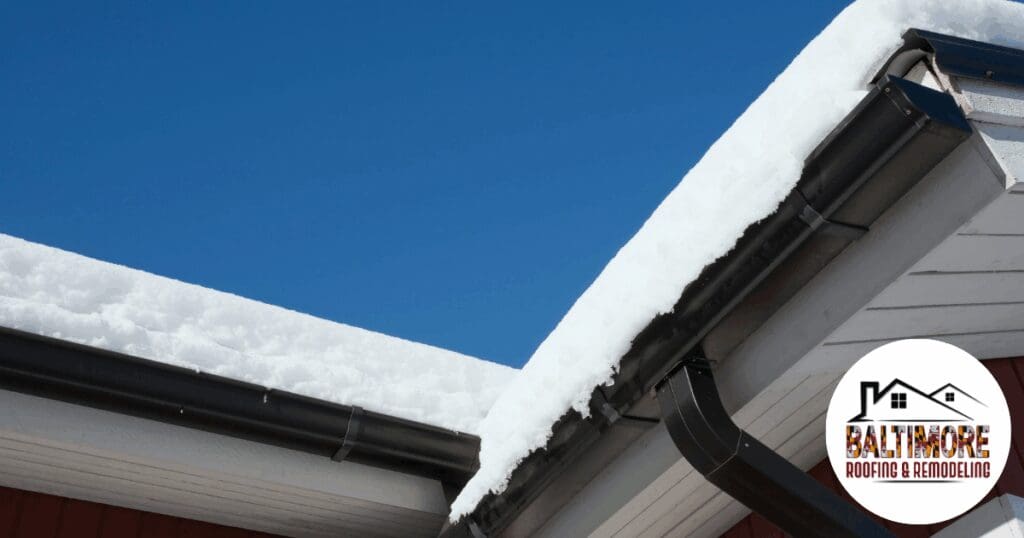
As the crisp autumn air turns biting and the first frost settles on Baltimore’s rowhomes and commercial buildings, a critical window of opportunity opens. Winter in the Mid-Atlantic is notoriously unpredictable. We might face a mild season of rain and sleet, or we could be hit with a series of Nor’easters dropping heavy snow and ice. Regardless of what the forecast says, one thing remains certain: winter is the ultimate stress test for your roof.
For homeowners and business owners alike, winter roof prep in Baltimore is not just a checklist item; it is a necessary defense strategy. A roof that has been ignored during the mild months can fail spectacularly under the weight of snow or the expansion of freezing water. The cost of emergency repairs in January—when crews are battling icy conditions—is significantly higher than preventative maintenance in November.
This comprehensive guide by Baltimore Roofing & Remodeling will walk you through the essential steps to fortify your property. From understanding the mechanics of ice dams to executing a proper roof maintenance before winter plan, we cover the specific actions you need to take to ensure your roof survives the season intact.



The Baltimore Winter Risk Profile
To effectively prepare, you must first understand what you are preparing against. Baltimore’s unique climate poses specific threats that differ from those in New England or the Deep South. Our winters are defined by the “freeze-thaw” cycle.
The Freeze-Thaw Cycle
Unlike areas that stay below freezing for months, Baltimore often fluctuates between 20°F at night and 45°F during the day. This constant cycling is brutal for roofing materials.
- Expansion and Contraction: Roofing materials expand during the warmer days and contract rapidly at night. This movement can loosen flashing, pop nails, and crack aging shingles.
- Water Infiltration: Snow melts during the day, turning into water that seeps into tiny cracks in masonry, shingles, or flat roof seams. When night falls, that water re-freezes and expands, forcing the crack open wider. Over a single winter, a microscopic hairline fracture can turn into a major leak.
Heavy Wet Snow
The snow we get in Maryland is often heavy and wet, unlike the powdery snow of the Rockies. This “concrete snow” places immense structural strain on your roof deck.
- Flat Roof Vulnerability: For commercial buildings and rowhomes with flat roofs, the risk of structural strain is higher. Without proper drainage, the weight can cause deck deflection (sagging), which leads to ponding water and eventual collapse or severe leaking.
Understanding these local risks highlights why a generic maintenance plan isn’t enough. You need a strategy tailored to our specific climate challenges for Baltimore winter roof prep strategy. To understand how different materials handle these stresses, you might find our guide on the different types of asphalt shingles helpful in identifying if your current material is up to the task.
Essential Roof Maintenance Before Winter
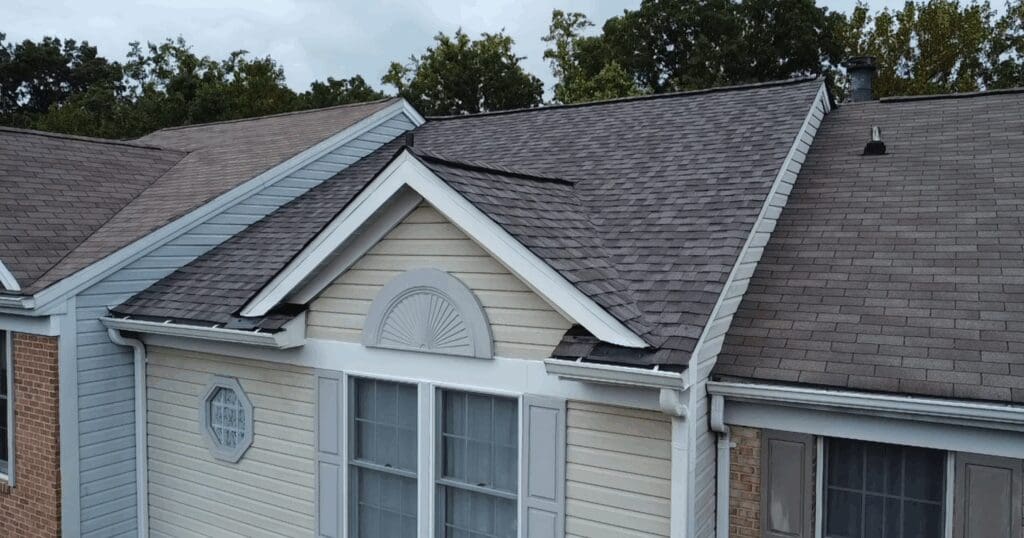
Effective roof maintenance before winter is about identifying weaknesses before the weather exploits them. Whether you have a steep-slope residential roof or a low-slope commercial system, the principles of inspection and repair remain the same.
The Perimeter Check
Start at the ground. Walk the perimeter of your building and look up at the roofline. You are looking for “waviness” or sagging in the straight lines of the roof.
- Fascia and Soffits: Look for peeling paint or rotting wood on the fascia boards. This often indicates that water has already been getting behind the gutters, a problem that will worsen with ice.
- Shingle Position: Look for shingles that are lifting or curling at the edges. In high winter winds, these loose shingles are the first to tear off.
Flashing Integrity
Flashing—the metal strips around chimneys, vents, and skylights—is the most common leak point. Over the summer, heat can dry out the caulking and sealants that hold flashing in place.
- The Fix: Inspect these areas closely. If the sealant looks cracked or dried out, it needs to be removed and re-applied with a high-quality, weather-resistant roofing sealant. Loose flashing should be re-nailed or screwed down immediately.
Moss and Algae Removal
While often seen as a cosmetic issue, moss is a sponge. It holds moisture against your shingles, and when that moisture freezes, it damages the mineral granules that protect your roof.
- The Fix: Gently remove moss growth. Do not use a high-pressure power washer, as this can strip the granules off the shingles. Use a soft-bristle brush or a specialized moss-killing solution recommended for roofs.
Tree Trimming
Overhanging branches are a major threat in winter. The weight of snow and ice can snap branches, sending them crashing through your roof. Even smaller branches can scrape against shingles in the wind, stripping away protective granules.
- The Fix: Trim back any branches that hang over your roofline. Aim for a clearance of at least 6 to 10 feet to prevent damage from falling ice or wind-blown debris.
For a more detailed breakdown of general maintenance tasks that apply year-round, refer to our article on how to maintain your roof.
The Ice Dam Menace: Prevention is Key
For Baltimore homeowners, few winter phrases are as dreaded as “ice dam.” An ice dam is a ridge of ice that forms at the edge of a roof and prevents melting snow (water) from draining off the roof. The water backs up behind the dam and can leak into a home and cause damage to walls, ceilings, insulation, and other areas.
How Ice Dams Form
- Heat Loss: Warm air from your living space escapes into the attic due to poor insulation or air leaks.
- Snow Melt: This warm air heats the roof deck, melting the snow on the upper parts of the roof.
- Refreezing: The melted water runs down the roof until it reaches the eaves (the edges). Since the eaves extend beyond the walls of the house, they are not heated by the attic air. The water hits this cold zone and freezes.
- The Dam: As this process repeats, the ice builds up, forming a blockage. Future meltwater pools behind this dam, eventually seeping under the shingles.
How to Prevent Ice Dams Roof Issues
The solution to ice dams is rarely on the roof itself; it is in the attic. You must keep the roof deck cold to prevent the snow from melting unevenly.
- Seal Air Leaks: Close up gaps around light fixtures, plumbing pipes, and chimneys that lead from the heated house into the attic.
- Add Insulation: Increase the R-value of your attic insulation to keep the heat in the living space where it belongs.
- Improve Ventilation: Ensure your attic has functioning intake (soffit) and exhaust (ridge) vents. This creates a flow of cold outside air that washes over the underside of the roof deck, keeping it cold.
Because this topic is so critical to winter survival, we have a dedicated guide explaining the mechanics of it. Understanding the importance of roof underlayment and ventilation is the single best way to prevent ice dams permanently.
The Winter Gutter Checklist
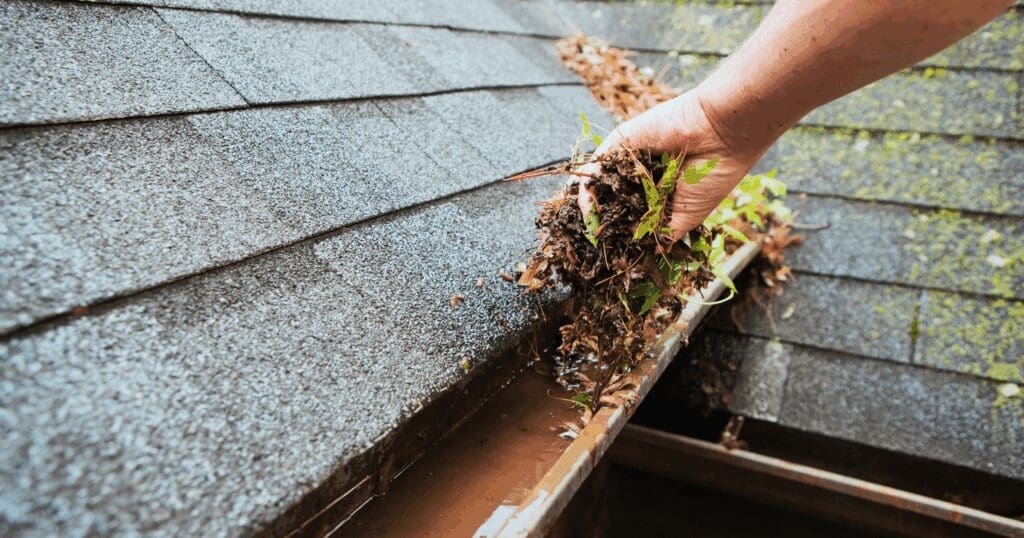
- Clear the Debris: Remove all leaves, twigs, and sludge. Do not forget the downspouts—a clogged downspout is just as bad as a clogged gutter.
- Check the Pitch: Gutters need a slight slope toward the downspout to drain. If water stands in the gutter after cleaning, the pitch may need adjustment. Standing water will turn into a heavy block of ice in winter.
- Secure the Hangers: The weight of ice and snow is immense. Check the gutter hangers (spikes or brackets) to ensure they are tight into the fascia board. If you can wiggle the gutter with your hand, it won’t survive a heavy snow load.
- Extend the Downspouts: Make sure the water exiting the downspouts is directed at least 4-6 feet away from your home’s foundation. Water pooling near the foundation can freeze and cause cracks in your basement walls.
If you find that your current gutters are constantly clogging or pulling away from the house, it may be time to consider an upgrade before the snow flies. Our guide on the importance of gutter installation in Baltimore details why a professional seamless system might be your best investment this season.
Special Considerations for Commercial Flat Roofs
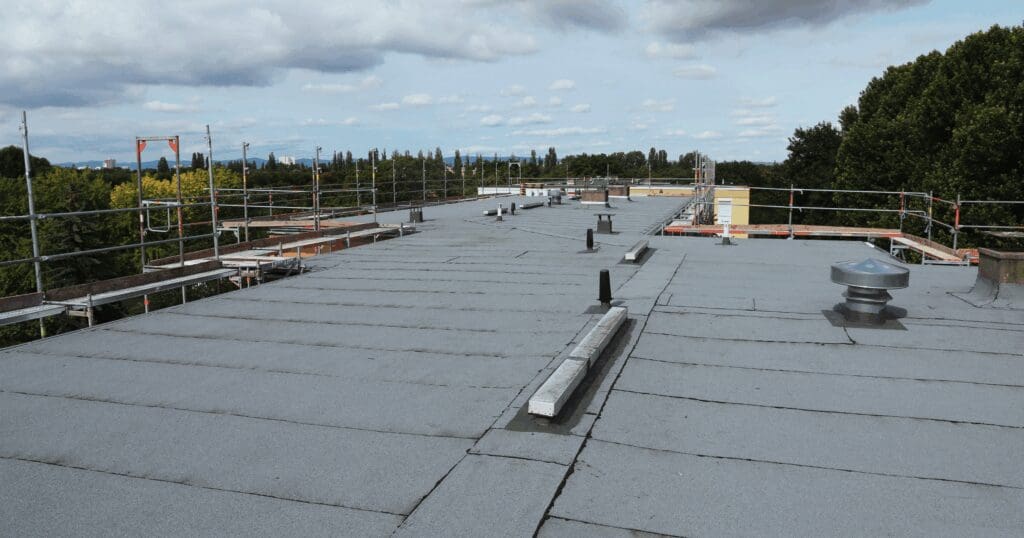
Commercial buildings face a different set of challenges for winter roof prep in Baltimore. Flat roofs (low-slope roofs) do not shed snow as easily as pitched roofs, leading to significant weight accumulation.
Inspect the Drains and Scuppers
On a flat roof, drainage is everything. If the internal drains or scuppers are blocked by leaves or trash, water will pool. In winter, this creates a massive ice sheet that adds thousands of pounds of dead weight to the structure.
- Action Item: Ensure all drain strainers and clamping rings are secure and free of debris.
Check Membrane Seams
Whether you have TPO, EPDM, or Modified Bitumen, the seams are the weak point. The contraction caused by freezing temperatures puts stress on these seams.
- Action Item: Have a professional walk the roof to probe the seams. Any separation or lifting needs to be heat-welded or patched immediately.
HVAC Unit Inspection
Commercial roofs are often home to heavy HVAC units. These units vibrate and can shift slightly.
- Action Item: Check the flashing and pitch pans around the base of these units. Ensure the condensate lines are draining properly and not discharging water directly onto the roof membrane where it can freeze and create a slip hazard or membrane damage.
Commercial owners should not attempt these inspections alone. The liability and technical knowledge required demand a professional approach. For a detailed maintenance strategy, refer to our post on commercial roof maintenance.
The Professional Advantage: Why You Need an Inspection Now
While many of these tips can be performed by a handy property owner, there is no substitute for a professional inspection. A certified roofer sees what you miss. We look for the subtle signs—the hairline crack in the chimney cap, the slight sponginess in the commercial deck, the improper nailing pattern on the ridge vent.
The “Winter-Ready” Inspection
A professional Baltimore winter roof prep inspection typically includes:
- Attic Inspection: Checking for insulation gaps and ventilation blockage (baffles blocked by insulation).
- Moisture Detection: Using infrared cameras or moisture meters to find trapped water beneath flat roof membranes.
- Stress Test: Evaluating the structural integrity of the roof deck to ensure it can handle the expected snow load.
Getting a professional assessment now provides a baseline. If storm damage occurs later in the winter, having a recent inspection report can be invaluable for your insurance claim. You can learn more about what to expect from this process in our guide to residential roof inspection in Baltimore.
Don’t Wait for the First Flake
The window for effective preparation is closing. Once the roofs are slick with frost or covered in snow, maintenance becomes dangerous and difficult. By taking action now—cleaning your gutters, inspecting your flashing, and improving your attic insulation—you are buying peace of mind. You are ensuring that when the wind howls and the snow piles up, your home remains warm, dry, and secure.
If you are unsure about the condition of your roof, or if the thought of climbing a ladder in November doesn’t appeal to you, call in the experts for winter roof prep in Baltimore.
Contact Baltimore Roofing & Remodeling today to schedule your pre-winter roof inspection and ensure your property is ready for whatever the season brings.