Home Insurance Roof Coverage: What is Covered (and What is Not)?
Let’s be clear: Your homeowners insurance is not a roof warranty. It is not a maintenance plan. If you are banking on your policy to pay for a new roof simply because yours is failing after 20 years, you are setting yourself up for a massive financial shock.
While you pay your premiums faithfully, insurance policies are strict legal contracts filled with specific definitions, exclusions, and conditions. They are designed to protect you from sudden catastrophes, not the inevitable aging of your home. Yet, confusion surrounds home insurance roof coverage. Many homeowners assume a leak is automatically a covered claim, or that an older roof will be replaced at full value after a storm. The reality is far more nuanced, and often, far more expensive for the homeowner. This is where Baltimore Roofing & Remodeling steps in.
This guide strips away the jargon and explains exactly how insurance companies view your roof. We will analyze the critical difference between actual cash value vs. replacement cost, clarify when policies actually cover roof leaks, and explore how the dreaded roof depreciation schedule insurance adjusters use can significantly lower your payout. Knowledge is your best tool for protecting your wallet.



The Golden Rule: Sudden and Accidental vs. Wear and Tear
To understand your policy, you must first understand the fundamental principle of homeowner’s insurance: it covers sudden and accidental damage, not maintenance issues. Insurance protects you from the unexpected, not the inevitable.
What Is Typically Covered (The “Perils”)
Standard policies (often called HO-3 policies) usually cover damage resulting from specific events, known as “perils.” If one of these events damages your roof, your insurance likely kicks in (subject to your deductible):
- Wind and Hail: This is the most common claim in Baltimore. High winds can tear shingles off, and hail can fracture the asphalt matting. This clearly falls under “sudden and accidental.”
- Fire and Lightning: Direct strikes or nearby fires that damage the roof structure are covered.
- Falling Objects: If a tree limb snaps during a storm and punches a hole in your deck, insurance covers the repair.
- Weight of Ice and Snow: In severe Baltimore winters, heavy snow loads can collapse a roof. Most policies cover this structural failure.
When these events occur, the damage is usually obvious and immediate. However, the extent of the roof coverage home insurance depends on how well you document the event. A professional assessment is vital after any major weather event. You can learn more about this specific process in our guide to storm damage roof repairs in Baltimore.
What Is Typically NOT Covered (The Exclusions)
Insurance companies will deny claims that result from neglect or the natural aging process. You are responsible for maintaining your home.
- General Wear and Tear: Shingles have a lifespan. If your 25-year-old roof starts leaking simply because the shingles are brittle and old, insurance will pay nothing. They view this as a maintenance responsibility.
- Lack of Maintenance: If you fail to clean your gutters and water backs up, rotting the fascia, the insurer will likely deny the claim. If moss grows unchecked and destroys the shingles, that is on you.
- Pest Damage: Insurance rarely covers damage from squirrels, raccoons, or termites eating through your roof deck.
- Manufacturing Defects: If the shingles blister or crack prematurely due to a factory error, your recourse is the manufacturer’s warranty, not your insurance policy. It is crucial to distinguish between these two types of protection. For clarity on what manufacturers cover, you must have a proper understanding of your new roof warranty.
Does Home Insurance Cover Roof Leaks?
This is the most common question homeowners ask, and the answer is: it depends on the cause.
The “Resulting Damage” Distinction
If a tree branch falls on your roof (a covered peril) and creates a hole, rain enters and ruins your hardwood floor. In this case, insurance covers the roof repair and the floor repair.
However, consider a different scenario. You have an old roof with cracked flashing around the chimney. Over five years, water slowly seeps in, rotting the attic beams and ruining the drywall in the bedroom below.
- The Roof: The insurance company will deny the claim to fix the roof because the cause was “wear and tear” or “lack of maintenance.”
- The Interior: Depending on your specific policy, they might cover the interior drywall damage if you can prove you didn’t know about the leak, but many policies now exclude mold or “continuous seepage” that occurs over weeks or months.
This highlights why proactive inspections are critical. Finding a small leak before it becomes a major claim prevents insurance disputes. A professional residential roof inspection in Baltimore acts as your proof of due diligence.
If you do find a leak that isn’t storm-related, you must act fast to repair it out-of-pocket before it causes expensive interior damage that your insurer won’t cover. Understanding the cost of roof repairs in Baltimore helps you budget for these non-insured maintenance events.
The Financial Core: Actual Cash Value vs. Replacement Cost
When an insurance company approves a claim for a full roof replacement, the check they write depends entirely on whether you have Actual Cash Value (ACV) or Replacement Cost Value (RCV) coverage. This distinction can mean a difference of thousands of dollars.
Replacement Cost Value (RCV)
This is the gold standard. If you have RCV coverage, the insurance company pays the cost to replace your damaged roof with new materials of “like kind and quality,” minus your deductible.
- Example: You have a 15-year-old roof destroyed by hail. A new roof costs $15,000. Your deductible is $1,000. The insurance company pays $14,000. You get a brand-new roof for the cost of your deductible.
Actual Cash Value (ACV)
This coverage takes roof depreciation into account. The insurer calculates what your roof is worth today, not what it costs to replace.
- Example: You have the same 15-year-old roof destroyed by hail. A new roof costs $15,000. However, the insurer determines your roof has used up 75% of its life. They depreciate the value significantly. They might only pay you $3,750 (the remaining value) minus the $1,000 deductible, leaving you with a check for $2,750. You must pay the remaining $12,250 out of pocket.
Many homeowners unknowingly switch to ACV policies to save money on premiums, or their insurer automatically switches their roof coverage to ACV once the roof reaches a certain age (often 15 or 20 years). You must check your policy declarations page immediately to confirm which type of coverage you have.
If you face a situation where roof coverage home insurance is minimal due to ACV, you need to make a strategic decision about the investment. Sometimes, full replacement is the only viable option despite the cost. Consult our guide on when to replace your roof to weigh the variables.
The Impact of Roof Depreciation Schedule Insurance
If you have an ACV policy, or if your RCV policy has a specific “roof surfacing” exclusion, the adjuster will use a roof depreciation schedule. This table determines how much value your roof loses every year.
- Material Matters: A 3-tab shingle roof depreciates faster than a slate or metal roof because its expected lifespan is shorter.
- Age is Everything: The older the roof, the less they pay.
- Condition Counts: Even if the roof isn’t “old” by years, if an adjuster sees moss, missing granules, or curling shingles, they can argue the roof is in “poor condition” and increase the depreciation percentage.
This is why regular maintenance is essentially a financial strategy. By keeping your roof in top condition, you argue against excessive depreciation. Simple tasks like cleaning gutters and removing moss preserve the “value” of the asset in the eyes of the adjuster. For tips on keeping your roof’s condition high, refer on our blog about how to maintain your roof.
The Deductible: Your Share of the Risk
Your deductible is the amount you pay before the insurance company pays a dime. In the past, this was often a flat $500 or $1,000. Today, many policies—especially in storm-prone areas like Maryland—use percentage deductibles for wind and hail claims.
- The Math: If your home is insured for $400,000 and you have a 2% wind/hail deductible, you must pay the first **$8,000** of the claim.
- The Trap: If a storm causes $10,000 worth of damage, and your deductible is $8,000, the insurance company only sends a check for $2,000. In this scenario, filing a claim might not even make sense, as it adds a “loss” to your claims history for a very small payout.
Before calling your insurance company about your home insurance roof coverage, check your deductible. If the cost of the repair is close to or less than your deductible, handle it out of pocket. Save the insurance claims for catastrophic losses.
Steps to Protect Your Claim Eligibility
You can maximize your chances of a fair settlement by taking specific, proactive steps before and after damage occurs.
Document Before the Damage
Take photos of your roof and property exterior now, while the weather is good. These photos prove the “pre-loss condition” of your home. If an adjuster later argues that your missing shingles were due to old age, you can produce a photo from six months ago showing a pristine roof, proving the damage was sudden.
Maintain Your Gutters
We cannot stress this enough: water damage caused by backed-up gutters is almost always denied as a maintenance issue. Installing a high-quality drainage system removes this variable. Learn more about protecting this system in the importance of gutter installation in Baltimore.
Immediate Mitigation
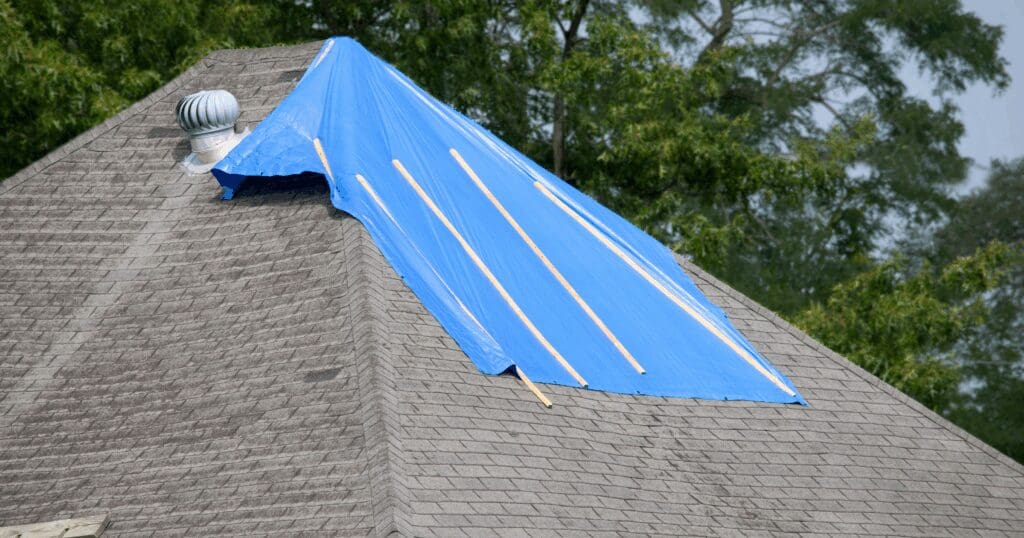
If your roof suffers damage, your policy requires you to “mitigate” or reduce further damage. This means placing a tarp over a hole or boarding up a broken window immediately. If you leave a hole open and a second rainstorm floods your bedroom, the insurer may deny the interior claim because you failed to protect the property.
Consult a Professional Before the Adjuster
Before you officially file a claim with your home insurance roof coverage, call Baltimore Roofing & Remodeling for an inspection. They can tell you if the damage is actually storm-related or just wear and tear. If it’s wear and tear, filing a claim will only result in a denial (which still stays on your record). If it is storm damage, the roofer can be present when the adjuster arrives to ensure they see all the damage.
Special Considerations for Flat Roofs
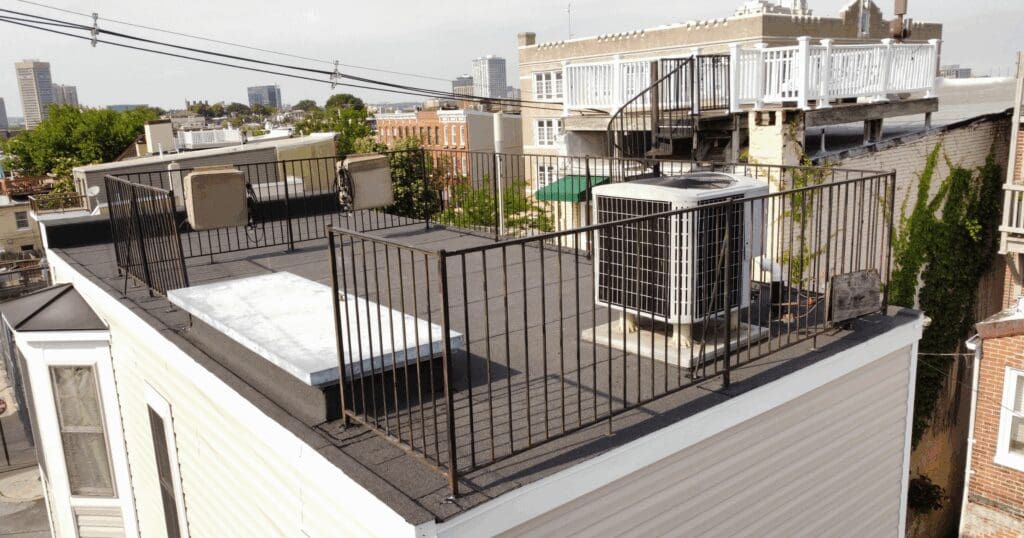
Owners of Baltimore rowhomes with flat roofs face unique insurance challenges. Insurers often scrutinize flat roofs more heavily because the risk of water damage is higher.
- Ponding Water Exclusions: Some policies exclude damage caused by standing water if it results from poor drainage design rather than a storm event.
- Maintenance Logs: Commercial policies, and some residential ones, may require proof of regular inspections for flat roofs. Without these logs, they might deny a claim based on “neglect.”
If you own a flat roof property, understanding the specific maintenance needs of your system is vital for coverage. Review our flat roof systems in Baltimore guide to identify your material and its specific vulnerabilities.
Furthermore, if you are a business owner, the stakes are even higher. Commercial policies have different definitions of loss and business interruption. Ensure you follow our commercial roof maintenance tips to keep your commercial policy valid.
Upgrades and Insurance Premiums
There is a silver lining. While insurance can be complex, upgrading your exterior can sometimes lower your premiums.
- Impact-Resistant Shingles: Installing Class 4 impact-resistant shingles can qualify you for discounts in some hail-prone areas.
- New Roof Discount: Simply replacing an old roof with a new one often lowers your premium because the risk of a leak drops significantly.
This applies to other exterior upgrades as well. New siding and windows improve the shell of your home, potentially reducing risk. Read more about how these upgrades work together in our blog on how exterior remodeling enhances home value and appeal.
Summary: Know Your Policy, Protect Your Home
Insurance is a safety net, not a maintenance plan. The best way to ensure your home insurance roof coverage works when you need it is to maintain your roof proactively, document its condition, and address minor repairs immediately out of pocket.
Do not wait for a catastrophe to read your policy. Check your declarations page today. Look for “Replacement Cost” versus “Actual Cash Value” and check your wind/hail deductible. If you are unsure about the current condition of your roof—and whether it would survive an adjuster’s inspection—call us.
Contact Baltimore Roofing & Remodeling today for a comprehensive inspection. We will provide you with a detailed report on your roof’s health, giving you the documentation you need to make smart decisions about your coverage and your home.