Home Improvement Financing in Baltimore: Navigating Loans and Payment Plans in 2026

It is the homeowner’s classic dilemma: The roof is leaking, the siding is peeling, or the gutters are failing, but the bank account isn’t quite ready for a five-figure withdrawal.
In an ideal world, every homeowner would have a dedicated “Capital Expenditure” fund sitting in a high-yield savings account. But in the real world of 2026 — where inflation has stabilized but prices remain high — most Baltimore families are managing tight monthly cash flows. When a storm hits or a 20-year-old shingle system finally fails, “paying cash” simply isn’t an option for everyone.
However, the alternative — ignoring the problem to “save up” — is financially dangerous. A roof leak is not a static problem; it is a progressive disease. As we discussed in our breakdown of Home Improvement ROI 2026, deferred maintenance is the fastest way to destroy property value.
In this exhaustive guide by Baltimore Roofing & Remodeling, we will analyze the Baltimore home improvement financing landscape, providing you with the math, the strategies, and the pitfalls to avoid so you can secure your home’s envelope without compromising your financial future.



Part 1: The Economics of the 2026 Construction Market
To understand why financing is a strategic tool rather than a “last resort,” we have to look at the current state of the Maryland construction economy.
1. The Inflation Trap
While the hyper-inflation of the early 2020s has subsided, we are now in a “sticky” price environment. Material costs for petroleum-based products (like asphalt shingles) and metal remain high.
- The Math: If a $15,000 roof replacement delayed by 18 months rises by just 5% in cost, that is an extra $750.
- The Comparison: If you take a $15,000 loan today at 7% APR, you might pay roughly $1,000 in interest over the first year. The “cost of waiting” almost cancels out the “cost of borrowing.”
2. The “Rot Premium”
This is the hidden cost of delay when considering home improvement financing in Baltimore. Water is patient. If you have a small active leak, water is soaking into your insulation (ruining its R-value) and your plywood decking.
- Decking Costs: Replacing a sheet of plywood in Baltimore currently averages $85–$120 per sheet installed.
- Structural Damage: If you wait a year and water rots 20 sheets of decking, you have added $2,000 to the project cost.
The Verdict: If the building envelope is compromised, borrowing money to fix it immediately is often cheaper than paying cash later for a larger disaster.

Part 2: Analyzing the Core Financing Options
Every homeowner’s financial profile is unique. Here is how the four main “buckets” of financing compare in 2026.
1. Contractor-Driven Roofing Payment Plans
Most reputable roofing companies in Maryland, including us, partner with specialized fintech lenders. These are unsecured personal loans tailored for the remodeling industry.
- The Approval Process: Usually takes less than 10 minutes via a mobile app.
- The Pro: Speed. If you are dealing with active storm damage, you don’t have time for a 45-day bank appraisal.
- The 0% APR Trap: Be cautious. These “Same-As-Cash” deals are great if you have a windfall coming (like a tax refund). However, if you don’t pay the balance in full by the end of the term, interest is often applied retroactively from day one.
2. HELOC for Home Repair (The Equity Play)
A Home Equity Line of Credit is a revolving credit line secured by your home, and it’s an effective home improvement financing Baltimore residents can utilize.
- Tax Benefits: Under 2026 IRS rules, interest on a HELOC is deductible only if the funds are used to “buy, build, or substantially improve” the home that secures the loan. Replacing a roof or upgrading to fiber-cement siding qualifies.
- The Cost: Rates are typically 1–3% lower than unsecured contractor loans.
- The Duration: Because it’s a mortgage product, expect a 30-day wait for closing and appraisal.
3. FHA 203k Renovation Loans
This is a government-backed product that allows you to bundle the purchase (or refinance) of a home with the costs of its repairs into a single 30-year mortgage.
- Best For: Baltimore rowhouses that need a flat roof replacement and structural work simultaneously.
- The Advantage: It spreads a $40,000 renovation over 30 years at a primary mortgage rate, making the monthly impact negligible (often under $150/month).
4. Maryland’s BeSMART Program
The Maryland Department of Housing and Community Development (DHCD) offers the BeSMART loan for energy-efficient upgrades.
- Qualification: If you are adding high-R-value insulation or a “Cool Roof” (white TPO), you can access low-fixed-rate financing (currently around 6.99% for 10 years) that is often more competitive than private bank loans.

Part 3: Why Your Credit Score Matters More in 2026
Lending standards have tightened. In 2026, the “tier” of your credit score significantly dictates your monthly payment.
| Credit Tier | Score Range | Typical Interest Rate (Unsecured) | Impact on $20k Project |
| Excellent | 740+ | 5.99% – 7.99% | ~$230 / month |
| Good | 680 – 739 | 8.99% – 12.99% | ~$270 / month |
| Fair | 620 – 679 | 14.99% – 19.99% | ~$330 / month |
| Poor | Below 620 | Hard Money / Specialized | High Risk |
If your score is in the “Fair” range, it may be more cost-effective to use a HELOC for home repair, as the collateral (your home) offsets the risk for the bank, resulting in a lower rate.
Part 4: The “Insurance Claim” Financing Bridge
Many homeowners investigating home improvement financing in Baltimore believe that if they have a storm claim, they don’t need financing. This is a misconception.
Insurance companies often pay in two installments: Actual Cash Value (ACV) upfront and Replacement Cost Value (RCV) only after the work is done and invoiced. This creates a “cash gap” where the homeowner must pay the contractor before receiving the final check from the insurance company.
Strategic Financing: Use a short-term, 12-month “No Interest” loan to bridge the gap between the start of the project and the final insurance payout. This ensures the contractor is paid, the warranties are activated, and your personal savings remain untouched. For more on this, see our guide: Does Insurance Cover My Roof?
Part 5: Avoiding the “Cheap Bid” Financing Trap
When looking at a monthly payment, it is tempting to pick the lowest estimate to save $40 a month. However, in the roofing world, a “low-cost” project usually cuts corners in three areas that will cost you more in the long run:
- Ventilation: Skipping ridge vents or soffit intake to save on labor leads to attic heat buildup, which cooks your shingles from the inside out.
- Flashings: Re-using old, rusted chimney flashings instead of installing new copper or aluminum is a recipe for a leak in 24 months.
- The Decking Inspection: Cheap contractors often “roof over” rotted wood to keep the quote low.
If you finance a $12,000 “budget” roof and it fails in year 7, but you have a 10-year loan, you are effectively paying for a “ghost roof.” Always ensure your residential roof inspection is thorough enough to justify the loan.
Part 6: 2026 Tax Credits and Rebates (The IRA Impact)
The Inflation Reduction Act continues to provide significant relief for exterior remodels that improve energy efficiency.
- Section 25C Credits: You may be eligible for a tax credit of up to 30% of the cost for certain “energy property” expenditures, including specialized insulation and skylights.
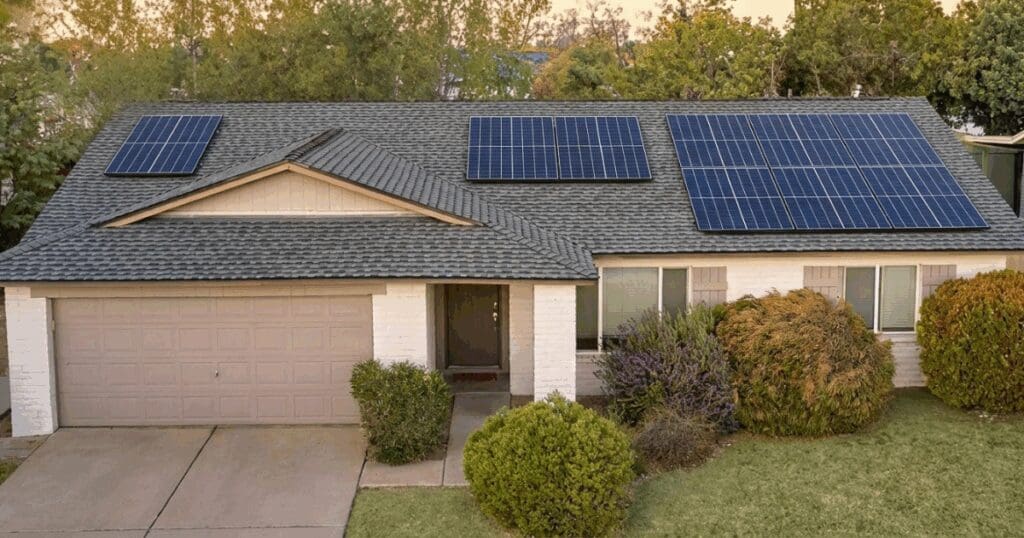
- Solar Integration: If you are financing a roof and decide to add solar shingles or panels simultaneously, the federal tax credit (30%) applies to the entire solar portion of the project, which can be used to pay down the principal of your loan immediately.
Summary: Designing Your Payment Strategy
Financing is not about “being in debt.” It is about asset protection.
- The Aggressive Saver: Use a 12-month 0% APR loan. Keep your cash in a 5% high-yield savings account. Pay the loan off in month 11. You effectively got a discount on the roof by earning interest on your own money.
- The Long-Term Resident: Use a HELOC. The interest is potentially tax-deductible, and the rates are the lowest available.
- The Modern Commuter: Use contractor-facilitated roofing payment plans. The application is paperless, the approval is instant, and the payment is fixed.
Your home is likely your largest investment. Don’t let a temporary lack of liquidity lead to a permanent loss in equity.
At Baltimore Roofing & Remodeling, we don’t just build roofs; we help homeowners build smart financial plans. We offer a variety of options for home Improvement financing Baltimore residents can trust, with transparent terms and no hidden fees.
Ready to see what your monthly payment looks like? Contact us today for a free assessment and a customized financing quote.