Top 10 Hidden Signs of Winter Roof Damage Every Baltimore Homeowner Must Look For
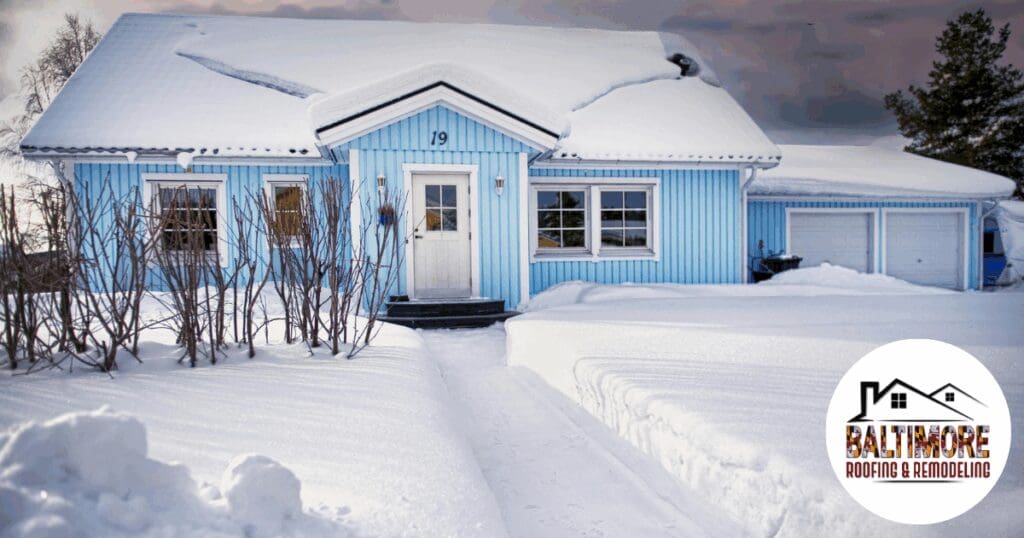
February in Maryland is a deceptive month. One day, the wind chill is in the single digits, and your roof is buried under a sheet of ice. A few days later, the sun comes out, the temperatures hit 55 degrees, and everything thaws. While you might be celebrating the early taste of spring, your roof is experiencing severe mechanical stress. The relentless freeze-thaw cycle of a Mid-Atlantic winter is brutal on exterior building materials. Ice expands, wind rips, and cold temperatures turn flexible sealants into brittle glass, leading to visible and unseen winter roof damage Baltimore residents have to deal with.
As we approach the rainy season, waiting for water to drip onto your dining room table is the most expensive way to discover a problem. Proactive homeowners know that the window between the last winter storm and the first heavy spring downpour is the critical time to assess the structural integrity of their home.
Identifying winter roof damage Baltimore properties suffer requires knowing exactly what to look for — because the most severe threats are rarely visible from the driveway. From shattered sealants to insidious ice dams, here are the top 10 hidden signs of winter roof damage you need to identify right now, courtesy of your friends at Baltimore Roofing & Remodeling.



The Physics of Maryland Winters: Why Your Roof Takes a Beating
Before we dive into the checklist, it is crucial to understand why winter is so destructive. Your roof is a dynamic system of overlapping layers designed to shed water. When temperatures drop below freezing, three physical phenomena attack that system:
- Thermal Shock: Asphalt shingles and metal flashings expand when warmed by the sun and contract violently when temperatures plummet at night. This constant shifting tears at nail holes and breaks adhesive bonds.
- The Expansion of Ice: Water expands by roughly 9% when it freezes. When melting snow seeps into a tiny micro-crack in your flashing and freezes overnight, it acts like a pry bar, widening the gap.
- Material Embrittlement: Roofing materials, particularly older asphalt shingles and rubber gaskets, lose their elasticity in freezing temperatures. They become rigid and highly susceptible to snapping under wind loads.
Understanding these forces helps you see why a roof that looked perfect in October might be critically compromised by March.
The Top 10 Signs of Winter Roof Damage
Grab a pair of binoculars and walk the perimeter of your home. If you are comfortable on a ladder, check your gutter lines. Here is the definitive post-winter checklist for Baltimore homeowners.
1. The Notorious Ice Dam Aftermath
Ice dams are the silent killers of residential roofs. They form when heat escapes from your attic, melting the snow on the upper parts of the roof. This water runs down to the cold eaves (the overhangs) and refreezes, creating a solid dam of ice.
- The Damage: Water continues to melt behind the dam, pooling up and physically pushing backward under your shingles, both the 3-tab variety and architectural shingles. This defeats the gravity-based design of your roof.
- What to Look For: Even after the ice melts, look for distorted or lifted shingles at the lower edges of your roof. You may also see water stains on the underside of your soffits. Prompt ice dam damage repair is critical before spring rains exploit those lifted shingles and pour directly into your exterior walls.
2. “Popped” or Backed-Out Roofing Nails
Your roof decking is made of wood, which absorbs moisture and changes shape. Your roofing nails are metal.
- The Damage: The constant thermal expansion and contraction during winter can slowly push roofing nails up and out of the wood decking.
- What to Look For: Look for small, raised bumps under the shingles. These are known as “nail pops.” Eventually, the nail will push completely through the shingle above it, creating a direct hole into your attic. This is a common issue we look for during any comprehensive inspection. Learn more about our process in The Essential Guide to Residential Roof Inspections.
3. Granule Loss in the Gutters (The Black Sand Effect)
The rough, sandpaper-like surface of your asphalt shingles is made of crushed stone granules. These granules provide fire resistance and block UV rays from destroying the asphalt layer beneath.
- The Damage: The scraping action of sliding ice and heavy snow can sheer these granules right off the shingle.
- What to Look For: Check the bottom of your downspouts after a thaw. If you see a heavy accumulation of black, coarse sand washing out onto your driveway or pooling in your gutters, your roof has prematurely aged. Bald shingles will blister and crack rapidly once the summer sun hits them.
4. Warped, Cracked, or Leaky Flashing
Flashing is the metal sheeting installed around chimneys, skylights, and in the valleys of your roof to direct water away from critical seams. It is the most vital waterproofing component on your home.
- The Damage: Heavy ice loads can bend metal flashing out of shape. Furthermore, the caulking and sealants used around flashing become brittle and crack in freezing temperatures.
- What to Look For: Look for gaps around the base of your chimney or skylights. If the sealant looks like dried, cracked mud, it is no longer holding back water. Fixing leaky flashing is not a DIY caulk job; it requires removing the surrounding shingles and properly integrating new metal to prevent catastrophic interior leaks.
5. Sagging Gutters and Pulled Fascia Boards
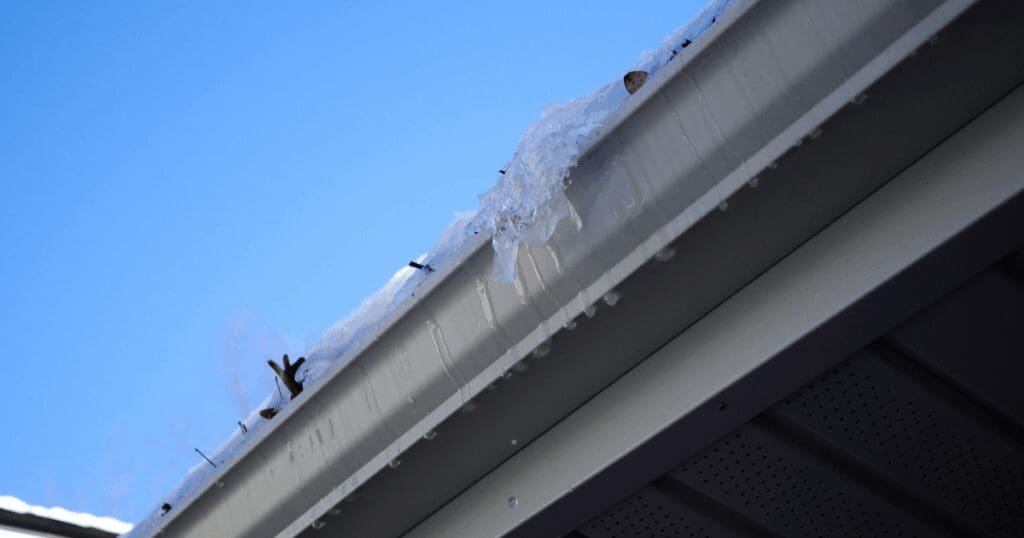
Your gutters are only designed to hold water and a few leaves — not hundreds of pounds of solid ice.
- The Damage: When gutters fill with ice, the sheer weight pulls the structural spikes out of your wooden fascia boards.
- What to Look For: Stand back from your house and look at the gutter line. Does it pitch cleanly toward the downspout, or does it sag in the middle? Look for a visible gap between the back of the gutter and the wood trim. If left unfixed, spring rains will shoot straight behind the gutter, rotting your home’s framing.
6. Interior Ceiling Stains (The Ghost Leak)
Sometimes the most obvious sign of winter damage isn’t on the outside of the house at all.
- The Damage: When wind-driven snow forces its way into your attic vents, or an ice dam pushes water under the underlayment, it can take days or weeks for that moisture to travel through your insulation and reach your drywall.
- What to Look For: Look for faint, yellowish-brown rings on your upstairs ceilings, particularly in the corners of rooms or near the chimney breast. Even if the spot is dry to the touch right now, it is a historical record of a winter breach that will reopen during the first spring thunderstorm.
7. Damaged or Missing Shingles from Winter Nor’easters
Baltimore is famous for its aggressive winter wind storms. High-velocity gusts sweeping off the Chesapeake Bay can easily exceed 50 MPH.
- The Damage: Because shingles are rigid in the cold, a strong wind gust can catch a slightly lifted edge and snap the shingle in half, rather than just bending it.
- What to Look For: Finding pieces of shingle in your yard is the most obvious red flag. On the roof, look for dark, rectangular patches where a shingle tab has blown off. If a winter storm has compromised your roof, you may be eligible for an insurance claim. Read our complete guide on navigating Storm Damage Roof Repair in Baltimore to protect your financial interests.
8. Attic Condensation and Mold Growth
As we covered heavily in our January blog on attic condensation, not all winter water comes from the sky.
- The Damage: When a roof is improperly ventilated, the warm, moist air from your heated living space rises into the freezing cold attic. It hits the underside of the roof deck and instantly turns to liquid condensation.
- What to Look For: Climb into your attic and inspect the underside of the plywood decking. If the nails are rusty, the wood looks water-stained, or you see the black dusting of mold growth, you have a severe ventilation failure.
9. Cracked Masonry and Spalling Chimney Brick
Your roof and your chimney are a heavily integrated system.
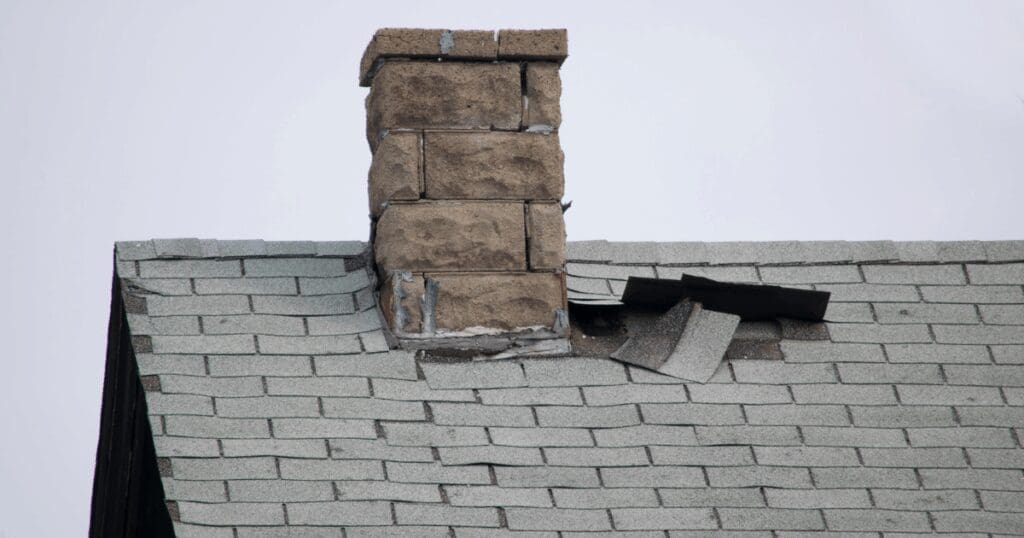
- The Damage: Bricks are porous. They absorb rainwater and melted snow. When the temperature plummets overnight, the water trapped inside the brick freezes and expands, physically blowing the face of the brick off. This is called spalling.
- What to Look For: Look for chunks of red brick or crumbling mortar on the roof surface directly below your chimney. A deteriorating chimney allows water to bypass the roof flashing entirely, rotting the wood framing from the inside out.
10. Ponding Water on Flat Roofs (The Rowhome Curse)
For owners of historic Baltimore rowhouses, the flat roof is a constant battleground.
- The Damage: Freezing temperatures are brutal on rubber (EPDM) or modified bitumen seams. When ice forms and expands inside a tiny seam defect, it rips the roof open. Furthermore, ice buildup often blocks the scupper drains at the rear of the property.
- What to Look For: Once the thaw happens, check your flat roof for “ponding.” If water is sitting in large pools for more than 48 hours without draining, the structural decking beneath it is actively sagging under the weight. You must address this immediately. Learn the long-term solutions in our breakdown of Flat Roof Repair vs. Replacement.
Why You Need a Spring Roof Inspection Right Now
Knowing the signs of damage is only the first step. The reality is that the most dangerous structural threats — like micro-tears in synthetic underlayment or compromised pipe boots — cannot be seen from the ground.
Booking a comprehensive spring roof inspection in late February or early March is the ultimate defensive maneuver for property owners.
Roofing contractors experience a massive surge in emergency calls during the first week of heavy April showers. Homeowners who waited to act suddenly find themselves at the back of a two-week waiting list while water pours into their kitchens.
By having a professional evaluate your property now, you transition from reactive panic to proactive management. Fixing a few popped nails and replacing a section of chimney flashing in March might cost a few hundred dollars. Waiting until that flashing fails completely in May could result in thousands of dollars in interior drywall and flooring damage.
Furthermore, maintaining the integrity of your exterior envelope directly correlates to your property’s overall equity. As detailed in our Home Improvement ROI 2026 report, buyers aggressively penalize homes with deferred roof maintenance. Fixing winter damage promptly ensures your home retains maximum value heading into the spring real estate market.

Don’t Let Winter’s Scars Ruin Your Spring
The freeze-thaw cycles of a Maryland winter are designed by nature to break building materials down. Your house fought a tough battle over the last few months, and it likely took some damage.
Do not assume that because you do not have an active drip, your roof survived unscathed. The subtle winter roof damage Baltimore weather leaves behind is insidious, steadily rotting your home’s structural framing long before you notice the signs in your living room.
Take a walk around your property this week. Look at your gutters, inspect your shingles from the ground, and check your attic for dampness. If you spot any of the 10 warning signs listed above, do not wait for the spring rains to test your luck. Be proactive and contact Baltimore Roofing & Remodeling for a roof inspection and to protect your investment.