
Flat Roof Ponding Water: How Standing Moisture Destroys Historic Baltimore Homes
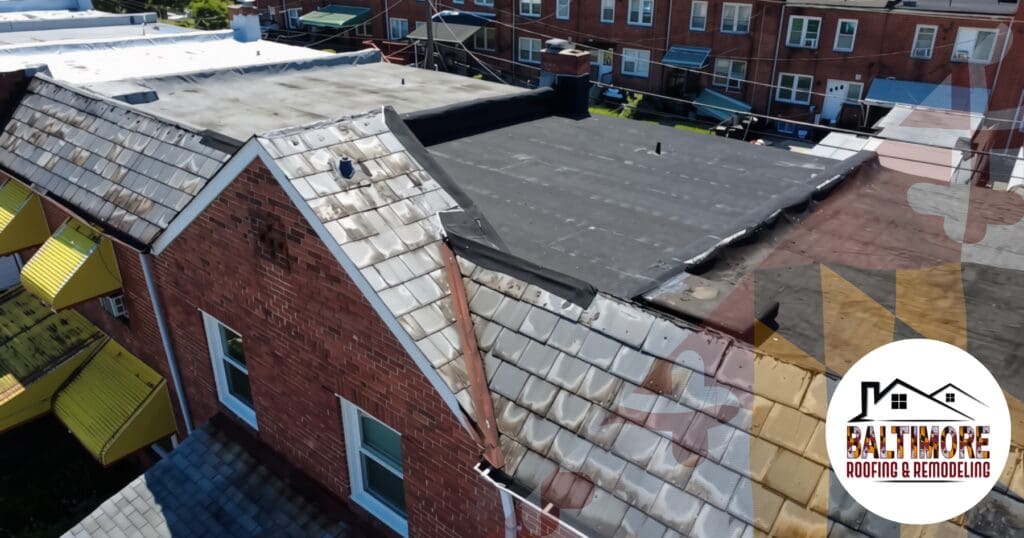
When property owners evaluate low-slope and zero-pitch roofs across Maryland, they often miscalculate the true danger of standing water. A flat roof does not possess the luxury of steep gravitational runoff, making proactive water management paramount. Following a heavy Mid-Atlantic downpour, persistent pooling becomes an immediate threat to the structural integrity of your property. Flat roof ponding water occurs when moisture remains on a roof surface for more than 48 hours without evaporating or draining. Because our diagnostic teams at Baltimore Roofing & Remodeling have inspected, restored, and reinforced historic urban envelopes across the region since 1885, we recognize that ponding is rarely a cosmetic defect—it is a structural warning sign that demands immediate remediation.



The Anatomy of Flat Roof Ponding Water: Quick Summary
- The Threshold of Failure: Water remaining on a flat roof membrane 48 hours after precipitation qualifies as active ponding.
- The Hydrostatic Load: Standing water exerts immense weight—approximately 5.2 pounds per square foot for every single inch of depth.
- The Deflection Cycle: Accumulated water bows structural roof joists downward, creating deeper low spots that capture even more water during subsequent storms.
- The Membrane Breakdown: UV rays reflect through standing water pools, magnifying solar radiation, baking membrane seams, and accelerating chemical degradation.
Understanding the Structural Mechanics of Zero-Pitch Drainage Failures
Flat roofs are never truly flat; effective roofing design always incorporates a subtle positive slope to guide runoff toward exterior scuppers, internal drains, or perimeter gutters. Consequently, when drainage systems clog or building frames settle, the natural shedding cycle completely halts. Property owners can review the foundational principles of residential roof health in our comprehensive guide on how to maintain your roof.
The Physics of Hydrostatic Load and Joist Deflection
Water is extraordinarily dense, weighing roughly 8.34 pounds per gallon. Therefore, when several inches of flat roof ponding water collect across a broad section of a roof, thousands of pounds of concentrated dead load press down on your structural framing. Over time, this hydrostatic load causes wood joists to deflect, creating a permanent sag in the roofline. As the wood framing bows downward, it forms a deeper depression that captures progressively larger volumes of water. This creates an escalating structural loop that transient contractors regularly misdiagnose as simple membrane wear.
Scupper Drainage Failure and Internal Conductor Backups
Historic rowhomes and urban commercial properties throughout Baltimore rely heavily on exterior scupper boxes or internal roof conductors to channel runoff. However, when falling leaves, masonry debris, or urban grit accumulate around a drain opening, the entire drainage pathway chokes. The backed-up water rises above the flashings, migrating laterally beneath the base plies. For broader regional weather remediation strategies, property owners should review our dedicated overview on storm damage roof repair in Baltimore.
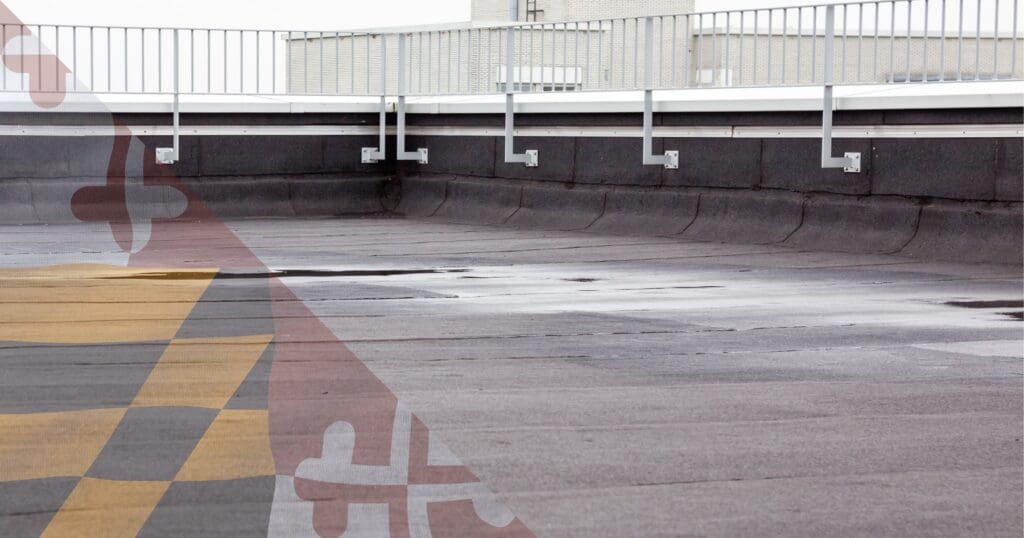
Long-Term Structural Damage from Standing Water
Standing water does not simply sit passively atop an exterior envelope. Instead, it unleashes a multifaceted chemical, physical, and biological attack that rapidly degrades commercial and residential assemblies from the exterior inward.
Membrane UV Degradation and Seam Delamination
Modern single-ply membranes (such as TPO and EPDM) as well as traditional modified bitumen systems rely on stable exterior conditions to maintain waterproofing oils. When flat roof ponding water forms on a roof, it acts as a magnifying lens for ultraviolet light. The focused solar radiation accelerates the breakdown of the polymer chains, turning pliable membranes brittle. Furthermore, standing water exerts continuous hydrostatic pressure against glued and heat-welded seams, eventually prying open micro-fissures and allowing water to saturate the underlying polyiso insulation boards. Scheduling a detailed residential roof inspection in Baltimore allows our diagnostic experts to pinpoint these compromised seams before moisture reaches your interior ceiling.
Joist Sagging, Masonry Deterioration, and Ceiling Collapse
Once water penetrates the membrane layer, it silently travels along historical wood framing, rotting joist pockets where timber connects with brick party walls. In historic brick structures, unaddressed moisture migrates into the mortar joints, triggering freeze-thaw masonry spalling and weakening the structural support. When moisture saturation compromises the sub-framing, the drywall or historic lath-and-plaster ceiling below loses all tensile strength, leading to sudden, catastrophic interior collapses. In cases of extensive, long-term exterior degradation, property owners frequently need to replace roof and siding at same time to re-establish total envelope integrity.
Professional Diagnostic and Remediation Services
We reject the guesswork approach to low-slope roofing maintenance. Spreading a temporary coat of roof cement over a low spot does not correct negative pitch or framing deflection. Our diagnostic specialists leverage 140 years of local structural expertise to engineer permanent drainage solutions that preserve your property’s structural equity:
- Tapered Insulation Systems: We design custom polyisocyanurate tapered insulation packages that create positive slope on dead-flat decks, actively directing all water toward existing drainage outlets.
- Drain and Scupper Sizing Audits: We evaluate existing drain diameters and overflow scupper heights, installing heavy-gauge collector boxes and leaf guards to prevent blockages during severe Mid-Atlantic weather.
- Freeze-Thaw Vulnerability Audits: Following intense winter weather, frozen pooled water causes severe seam tearing, making early spring roof leak detection in Maryland essential for all commercial and urban buildings.
- Regional Accountability: We bring specialized diagnostic standards to property owners across central Maryland, from Columbia to Silver Spring.
Secure Your Exterior Envelope Today
Do not wait for a structural ceiling collapse or toxic mold outbreak to confront flat roof ponding water. Standing water constantly works against your roof deck, silently expanding micro-fissures until catastrophic storm leaks appear. You must take aggressive action to protect your investment. If you observe standing water, sagging ceilings, or chronic drain blockages, contact our team immediately for an emergency 48-hour diagnostic audit. Our specialists will track down every structural vulnerability and design a permanent, high-performance drainage solution. Whether your building is located in Towson or Frederick, take the necessary steps to secure your exterior envelope today.

Frequently Asked Questions
How long can water sit on a flat roof before it is considered ponding?
Industry engineering standards define flat roof ponding water as any water that remains standing on a roof surface for 48 hours or longer following precipitation. If water fails to evaporate or drain within this two-day window, your roof has an active drainage failure.
Does ponding water automatically void a roof warranty?
Yes. Most major membrane manufacturers explicitly exclude damage caused by ponding water from their warranty coverage. If standing water remains on the membrane due to poor deck slope or blocked scuppers, manufacturers classify the resulting leaks as structural maintenance neglect.
How much weight does ponding water add to a roof?
One inch of standing water weighs approximately 5.2 pounds per square foot. A 100-square-foot puddle that is three inches deep adds over 1,500 pounds of dead weight to your roof joists, placing severe stress on your home’s structural framing.
Can I fix flat roof ponding water by adding a thick roof coating?
No. Elastomeric or silicone coatings seal minor membrane pores, but they do not alter the slope of the roof deck. Applying coatings over low spots without correcting the underlying framing sag or installing tapered insulation merely creates a sealed bathtub that continues to capture standing water.
What is a tapered insulation system?
A tapered insulation system consists of rigid insulation boards manufactured with a factory-engineered slope (typically 1/8-inch or 1/4-inch per foot). When installed beneath a new roofing membrane, these boards turn a dead-flat deck into a gently sloped surface that guides all water directly into drains.
Why do historic Baltimore rowhome roofs frequently experience ponding?
Historic rowhomes often settle over decades, causing the heavy center bearing walls to shift slightly. This natural structural settling reverses the subtle slope toward the rear drainage scuppers, creating low pockets in the middle of the roof where water collects.
How do I know if ponding water has rotted the structural roof decking?
Warning signs of decking rot include a visibly uneven or spongy roof surface when walking, sagging ceiling lines inside top-floor rooms, brown water rings on interior drywall, and recurring plaster cracking along structural party walls.
