
Flat Roof Ponding Water in Baltimore: The Silent Killer of Historic Rowhomes
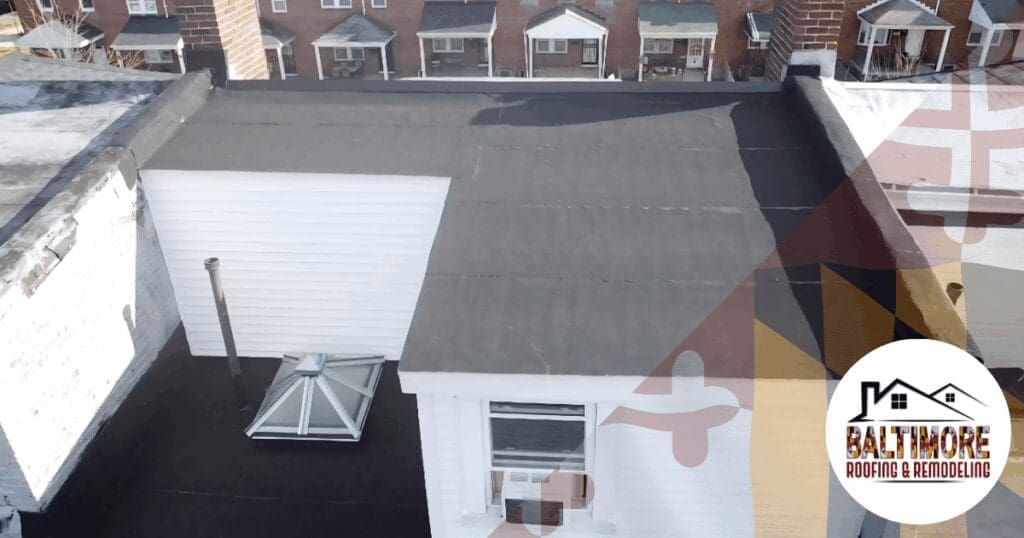
Most property owners do not actively monitor their roof until water physically drips from the ceiling. You wait for the severe thunderstorm, look for a wet spot on the drywall, and assume that if the interior is dry, the exterior is secure. However, this reactionary mindset creates a massive, expensive blind spot for urban homeowners and commercial property managers. In reality, the most catastrophic structural damage does not occur during the storm; it occurs in the quiet, stagnant days immediately following the rain.
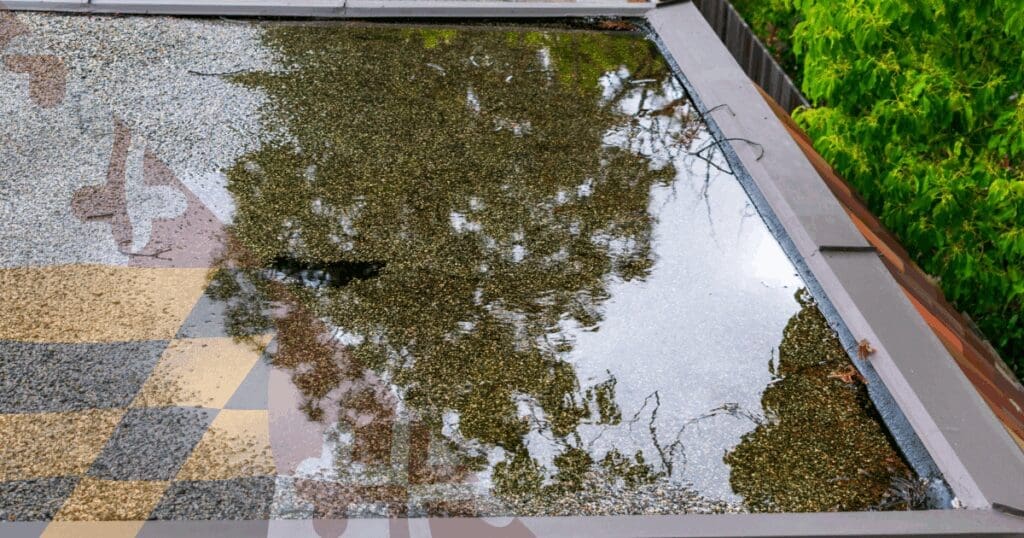
When searching for the underlying cause of severe structural rot, property owners dealing with flat roof ponding water in Baltimore consistently discover a harsh architectural truth. If a puddle remains on your flat rubber membrane for more than 48 hours after a rainstorm, your drainage system has completely failed. That standing water is not a harmless puddle; it is an active threat aggressively dissolving your roof’s chemical adhesives, destroying your historic masonry, and rotting your plywood decking in absolute silence.
At Baltimore Roofing & Remodeling, we consider standing water an emergency structural liability. We operate as your actual neighbors, protecting tight-knit urban communities across the region. We design our advanced diagnostic protocols to locate and eliminate these stagnant pools long before gravity finally pulls thousands of gallons of water through your living room ceiling.
What is Flat Roof Ponding Water?
Flat roof ponding water is any accumulation of rainwater that remains on a low-slope roof surface for more than 48 hours without evaporating or draining. This standing water acts as a magnifying glass for UV radiation, breaks down membrane seam adhesives, and adds massive dead weight that physically warps the structural decking.



At a Glance: The Dangers of Standing Urban Water
- The Environmental Threat: Stagnant water aggressively accelerates the chemical breakdown of rubber and thermoplastic membranes. The water acts as a physical magnifying glass, multiplying the destructive power of summer UV radiation directly onto your roof’s most vulnerable seams.
- The Critical Vulnerabilities: The intersection where a flat roof membrane dead-ends into a vertical brick parapet wall represents the highest risk zone. Ponding water easily bypasses failing termination bars and travels laterally through shared rowhome masonry.
- The Structural Consequence: Water is incredibly heavy. A single inch of ponding water covering a 10-by-10 foot area adds over 500 pounds of dead weight to your roof, causing the joists to physically sag and creating a deeper bowl that catches even more water.
- The Local Solution: Hiring dedicated local professionals to completely re-pitch the deck using tapered insulation guarantees flawless water shedding and eliminates the threat of structural collapse across the entire state, from historic Baltimore City to the expansive commercial parks of Howard County.
The Physics of Low-Slope Drainage: It Is Never Actually Flat
To fully grasp the severe danger of our current weather patterns, you must understand how water physically behaves on low-slope architecture. Homeowners frequently misjudge the physical dynamics of their urban roofs.
The Tapered Insulation Failure
Here is the catch: A “flat” roof should never actually be completely flat. Building codes rigorously dictate that a low-slope roof must possess a minimum pitch — typically a quarter-inch of drop for every twelve inches of horizontal run. This microscopic angle utilizes gravity to slowly force the water toward the rear scuppers or internal drains.
However, many older rowhomes and warehouses completely lack this built-in structural slope. When transient contractors simply glue a new rubber membrane directly over a perfectly flat deck, they guarantee immediate failure. To keep thousands of gallons of water moving, a highly skilled roofer must install a tapered insulation system. This involves laying down rigid foam boards that are cut at precise geometric angles, physically building a slope directly into the roof deck. When contractors skip this critical step to offer a cheaper bid, they trap the water on top of your home.
Scuppers, Internal Drains, and Urban Clogs
Furthermore, your roof just survived months of brutal thermal shock and spring debris. The drainage points on a flat roof — specifically the scuppers (holes cut into the parapet walls) and internal cast-iron drains — represent a massive bottleneck.
During a severe Maryland thunderstorm, high-velocity rain washes leaves, urban trash, and spring pollen directly into these small drainage ports. Once the scupper clogs, the water slows down and eventually stops moving entirely. It creates a temporary dam. The accumulated water then backs up, filling the roof like a shallow swimming pool. Because the membrane seams are only designed to shed water laterally, they quickly fail when submerged vertically under standing water.
How Standing Water Destroys Your Membrane Ecosystem
Understanding the physics of water accumulation allows our diagnostic specialists to target specific architectural weak points. When we execute a comprehensive structural inspection, we heavily analyze the chemical degradation of your waterproofing materials.
UV Magnification and the “Magnifying Glass” Effect
Most low-slope properties utilize an EPDM (black rubber) or TPO (white thermoplastic) membrane. These advanced materials are highly resistant to standard rainfall. However, they are highly vulnerable to submerged UV exposure.
When a puddle of water sits stagnant on your roof during a 95-degree Maryland summer afternoon, the water does not just evaporate. It acts as a literal magnifying glass. The clear water intensely focuses the sun’s ultraviolet rays directly onto the membrane surface below. This superheated focal point aggressively boils the chemical plasticizers out of the membrane. The rubber quickly turns dry, brittle, and heavily cracked, entirely losing its ability to expand and contract.
The Brutal Freeze-Thaw Cycle
Conversely, the threat heavily multiplies during the winter months. If you own a property in Harford County or Carroll County, you routinely experience rapid temperature fluctuations. When daytime snow melts into a puddle on your flat roof, and the temperature immediately drops below freezing at night, that puddle violently turns to solid ice.
Physics dictates that water expands by roughly nine percent when it freezes. When the ponding water turns to ice, it physically grips the membrane and violently pulls at the seams. This relentless freeze-thaw cycle rips the industrial adhesives apart. When the ice finally melts the following afternoon, the resulting water pours directly into the freshly fractured seams and rots the plywood deck below.
The Historic Rowhome Reality: Parapet Walls and Shared Masonry
This seasonal moisture threat severely impacts our urban residential clients. Properties tightly packed into historic districts face a highly unique structural challenge that standard suburban contractors rarely understand.
Shared Risk in the Urban Core
If you own a classic, historic rowhome in downtown Baltimore City, you physically share structural red brick parapet walls with your immediate neighbors. This historic architectural design completely eliminates isolation. Consequently, your property remains entirely at the mercy of your neighbor’s maintenance habits.
If the property next door utilizes a failing rubber membrane, the resulting standing water will completely submerge the base of the shared parapet wall. Because water rapidly migrates laterally, that moisture will eventually hit the porous brick. The water easily travels straight through the shared masonry and heavily destroys your interior plaster walls, even if your personal roof possesses flawless integrity.
The Termination Bar Crisis
To effectively protect these massive urban investments, our specialized technicians must aggressively master the precise, technical mechanics of flat roof systems in Baltimore. The most critical point of failure occurs where the flat membrane turns upward and anchors into the vertical brick parapet wall.
Contractors secure this transition using a metal strip called a termination bar. If a rushed contractor improperly installs this bar, or uses a cheap, temporary polyurethane sealant against the aging brick, standing water will immediately exploit the gap. We aggressively inspect the coping metal covering the parapet walls and thoroughly test the masonry transitions. You must mandate these rigorous perimeter checks to successfully block lateral water intrusion from completely destroying your historic urban equity.
The Commercial Impact: Protecting Your Business Assets
The threat of stagnant water extends far beyond residential rowhomes. Managing commercial real estate requires a distinctly different operational mindset. When dealing with commercial architecture, the stakes are exponentially higher.
Inventory Risk and Catastrophic Failure
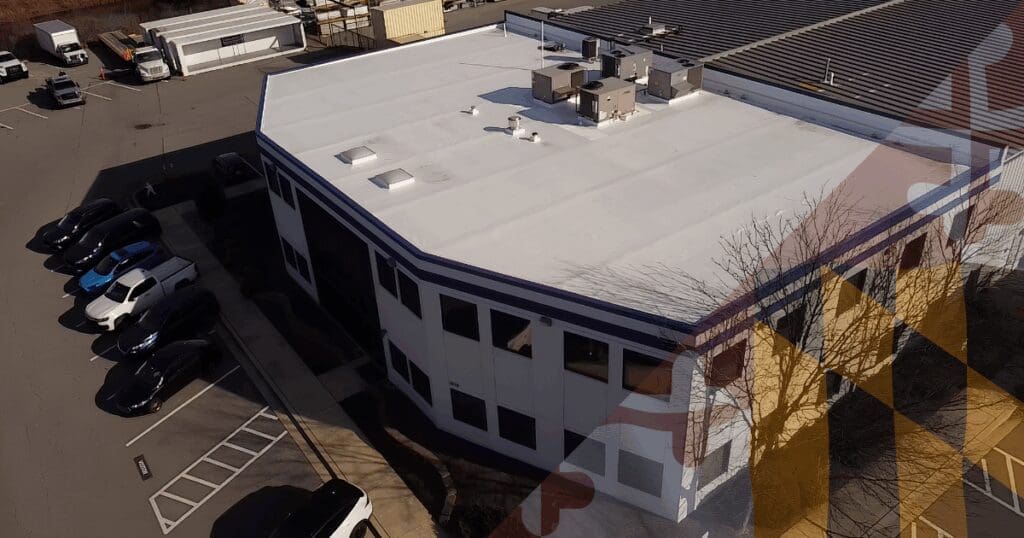
If you manage a massive, flat-roofed warehouse facility in Anne Arundel County or an expansive retail center in Montgomery County, ponding water is a direct threat to your bottom-line revenue. A massive commercial roof can hold tens of thousands of gallons of standing water. If a submerged seam finally gives way, the water does not just drip; it pours directly onto your active manufacturing equipment, your retail floor, or your vital inventory storage.
We highly recommend implementing strict, routine commercial roof Maintenance in Baltimore. By actively contracting our elite diagnostic teams to clear your internal drains, inspect your scuppers, and patch your minor seam failures before the rainy season arrives, you guarantee that your commercial operations remain entirely uninterrupted.
HVAC and Heavy Equipment Sag
Furthermore, commercial flat roofs serve as structural platforms for massive, incredibly heavy HVAC units and air handlers. Over decades, the sheer weight of this equipment causes the metal decking or wooden joists directly beneath the units to slightly compress and sag.
This compression creates a permanent, structural bowl directly beneath the HVAC unit. Every time it rains, water funnels directly into this depression, creating an inescapable pond right at the base of your most expensive mechanical equipment. Our crews physically build up these depressions using high-density tapered insulation boards, aggressively redirecting the water flow away from the HVAC curbs and forcing it directly toward the drainage scuppers.
Financial Math: The Economics of Standing Water
Ignoring the early warning signs of a failing drainage system drastically multiplies your long-term financial liability. Catching a severe drainage failure early fundamentally changes the entire economic reality of the repair.
Stop Paying for Temporary Tar Patches
Let’s talk directly about the money. When homeowners discover a massive puddle on their roof, panic dictates their actions. They frequently hire a cheap handyman to climb up and slather a massive bucket of wet-surface roofing tar directly into the standing water.
This is the definition of throwing capital into the trash. Roofing tar is a temporary, surface-level band-aid. It does absolutely nothing to solve the actual structural problem: the lack of physical slope. The puddle will immediately return the next time it rains, and the water will quickly eat through the cheap tar. Stop paying transient laborers for temporary patches. You must attack the root cause of the structural depression.
Financing the Tapered System Upgrade
If an undetected ponding issue has already heavily destroyed your home’s structural plywood framing, we immediately pivot to flexible, realistic financial solutions. We actively secure robust, low-interest capital solutions to absolutely guarantee you can replace the failing membrane and install a proper tapered insulation system without completely liquidating your family’s emergency savings. By breaking the large capital cost of a total structural re-pitch into manageable monthly payments, you instantly eliminate the active water intrusion and rapidly upgrade your property’s overall equity in one unified project.
The Local Maryland Advantage vs. Private Equity
When property owners finally discover massive, hidden wall rot caused by stagnant water, out-of-state corporate conglomerates completely exploit this fear to aggressively maximize their wall street profit margins.
Rejecting Subcontractor Shortcuts
Massive private equity firms rely entirely on cheap, transient subcontractor labor to finish isolated jobs as quickly as physically possible. They heavily rush the diagnostic phase, ignore the complex geometry required to build a tapered insulation system, and strictly utilize subpar flashing techniques. Ultimately, this shoddy, rushed craftsmanship guarantees that your new system will pool water and fail. The transient subcontractor has already left the state long before your interior ceilings begin to cave in.
Our Dedicated Local Commitment
We operate entirely differently. While out-of-state private equity firms systematically buy up local trades and totally gut their operational quality, we stubbornly hold the line for the property owners of Maryland.
We proudly protect homes and businesses across Baltimore City, Baltimore County, Anne Arundel County, Carroll County, Cecil County, Harford County, Howard County, Montgomery County, and Prince George’s County. Our leadership team brings a massive 140-year family history in the region to every single project we execute.
Therefore, we exclusively utilize dedicated, highly trained local professionals. We deliver radical honesty, exact punctuality, and a stubborn commitment to flawless structural execution.
Take Action Before the Summer Heat Arrives
You cannot control the unpredictable Maryland weather, but you possess absolute control over your property’s primary defense systems. Do not let the quiet, stagnant days following a rainstorm lure you into a false sense of security. Standing water aggressively dismantles your home’s structural envelope in absolute silence.
Stop waiting for the dark water stains to finally breach your drywall. When you secure a professional audit and an elite diagnostic team, you instantly replace passive anxiety with absolute, verified peace of mind. Moreover, you ensure that your entire home remains fully protected, compliant, and structurally sound long before the extreme humidity and violent thunderstorms of July completely arrive.
Contact Baltimore Roofing & Remodeling today to schedule your comprehensive exterior diagnostic evaluation. We will aggressively hunt down the hidden vulnerabilities, properly install geometric tapered insulation, and permanently eliminate the devastating threat of flat roof ponding water in Baltimore.

Frequently Asked Questions: Flat Roof Drainage
Is it normal for water to sit on a flat roof?
No, it is never normal or structurally acceptable for water to remain on your roof indefinitely. While temporary puddles are common immediately following a heavy downpour, building codes and material manufacturers rigorously dictate that all water must successfully drain or evaporate within 48 hours. If water remains past this window, your drainage system is actively failing.
How do you fix a flat roof that holds standing water?
You cannot fix ponding water with a simple patch or a bucket of roofing tar. The only permanent, structurally sound solution is to physically alter the slope of the roof deck. Our elite technicians achieve this by removing the old membrane and installing a tapered insulation system. This involves laying down rigid foam boards cut at precise geometric angles to force gravity to pull the water toward the scuppers.
Does standing water void my rubber roof warranty?
Yes. Almost every major commercial manufacturer of EPDM (rubber) and TPO (thermoplastic) membranes explicitly includes a “ponding water exclusion” directly in their warranty contracts. If a manufacturer’s inspector discovers that your roof failed because it was submerged under stagnant water for extended periods, they will instantly void your warranty and refuse to cover the material replacement costs.
Why is my internal flat roof drain backing up?
Internal cast-iron drains frequently back up because of heavy urban debris. During the fall and spring seasons, massive amounts of leaves, twigs, and pollen wash into the drain cage. Furthermore, in historic urban environments like downtown Baltimore, older cast-iron plumbing stacks slowly degrade and narrow from the inside out due to heavy rust. You must hire a qualified, local professional to routinely clear the drain cages and snake the internal plumbing lines to prevent catastrophic water backups.
