
How Summer Heat Damages Roofs in Maryland: The Thermal Shock Crisis
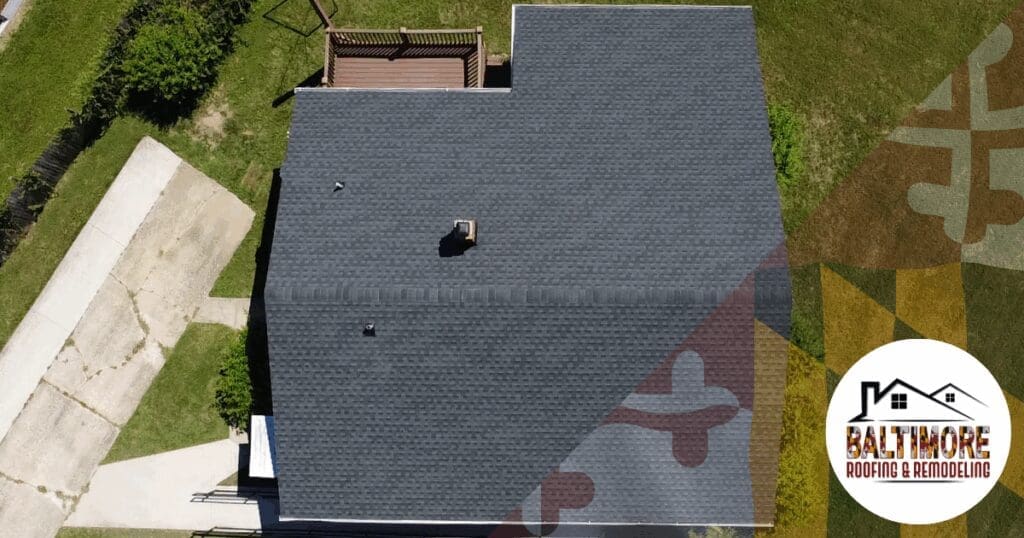
July temperatures routinely push past 90 degrees across the Mid-Atlantic. Learning exactly how summer heat damages roofs in Maryland property owners rely on becomes a structural necessity. Local homeowners retreat into air-conditioned living spaces. Meanwhile, the exterior envelope absorbs brutal, unrelenting solar radiation. Our diagnostic teams dispatch directly from our Baltimore County home base to handle these extreme weather calls. Baltimore Roofing & Remodeling leverages a family legacy dating back to 1885 to protect local homes. Furthermore, we routinely execute complex structural restorations in historic Baltimore City, actively fighting the invisible destruction occurring inside your attic space.



At a Glance: What is Thermal Shock?
- The Temperature Spike: Ambient summer air hits 95 degrees. Consequently, dark asphalt shingles absorb the sun’s energy. Surface temperatures rapidly soar past 150 degrees during peak afternoon hours.
- The Rapid Contraction: Nighttime cooling arrives quickly following a sudden summer thunderstorm. This forces the superheated materials to contract violently.
- The Structural Fracture: Rapid expansion and contraction physically tear asphalt shingles apart. Therefore, the adhesive strips fail, and the underlying plywood decking warps.
- The Ventilation Failure: Thermal shock accelerates when poor attic ventilation traps extreme heat. Superheated air cannot escape, effectively baking the roof from the inside out.
The Physics of Shingle Blistering
Understanding material science remains critical to protecting your real estate equity. Roofing materials absorb massive amounts of solar radiation. An unventilated attic creates a severe oven effect. Consequently, heat literally bakes the asphalt shingles from the inside out.
The Evaporation Trap
Moisture naturally rises from your living space into the attic. High humidity collides with the baking roof deck. Trapped moisture aggressively attempts to escape through the asphalt layers. This causes the actual shingle surface to bubble and blister. Those blisters eventually pop under intense heat. Ruptured shingles leave the fiberglass mat completely exposed to violent summer rainstorms.
The Granule Loss Crisis
Furthermore, extreme temperatures compromise the asphalt matrix holding the protective granules in place. These granules serve a vital purpose. They reflect UV rays and provide fire resistance. Constant thermal expansion loosens their grip. Heavy summer downpours then wash these crucial granules directly into your gutter system. Bald shingles deteriorate exponentially faster than properly protected materials.
The Intake-to-Exhaust Mathematics
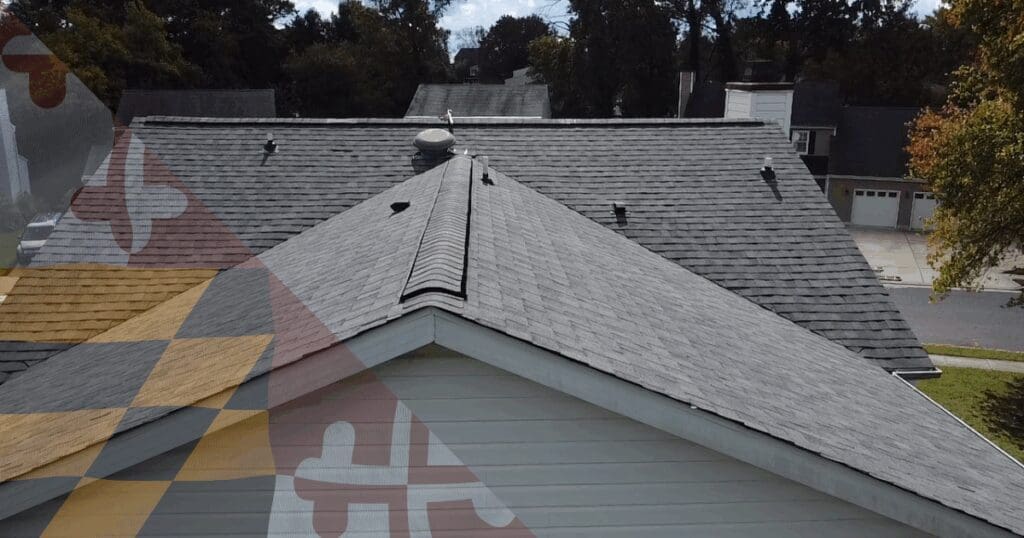
You cannot simply seal a house and ignore airflow. Proper structural preservation requires exact intake-to-exhaust ventilation ratios. Out-of-state contractors frequently fail to calculate this math correctly. Transient laborers prioritize speed over technical precision.
Soffit and Ridge Balance
Cool air must enter through the soffit vents at the eaves. Superheated air must simultaneously exit through the ridge vent at the peak. An imbalance forces the HVAC system to work incredibly hard. Additionally, stagnant 150-degree air actively delaminates the plywood decking over time. Learn exactly how these systems interact by reading our guide on the Importance of Roof Underlayment and Ventilation.
The Role of Baffles
Insulation contractors frequently make a catastrophic error. They accidentally stuff fiberglass insulation directly over the soffit intake vents. This completely chokes the attic’s respiratory system. Consequently, we strictly install rigid baffles during comprehensive replacements. These vital channels ensure fresh air bypasses the insulation. Continuous airflow remains the absolute best defense against severe thermal shock.
Material Degradation: How Shingles Fail
Asphalt shingles possess a finite thermal capacity. Manufacturers engineer them to withstand standard weather fluctuations. However, severe Mid-Atlantic heat waves push these materials past their breaking point.
Adhesive Sealant Failure
Every modern architectural shingle utilizes a factory-applied adhesive sealant strip. This tar-based line bonds the shingles together. It prevents severe wind uplift during violent squalls. Unfortunately, chronic 150-degree attic heat melts this adhesive. The glue completely dries out and crystallizes. Unsealed shingles subsequently flap in the wind and snap off entirely.
Curling and Cupping
You might notice the edges of your shingles turning upward. We call this phenomenon “curling.” Conversely, “cupping” occurs when the center depresses while the edges rise. Both reactions indicate severe heat stress. The asphalt dries out, shrinks, and permanently distorts the fiberglass mat. Distorted shingles cannot effectively shed water. Rain actively pools in these depressions and eventually wicks under the underlayment.
The Plywood Decking Crisis
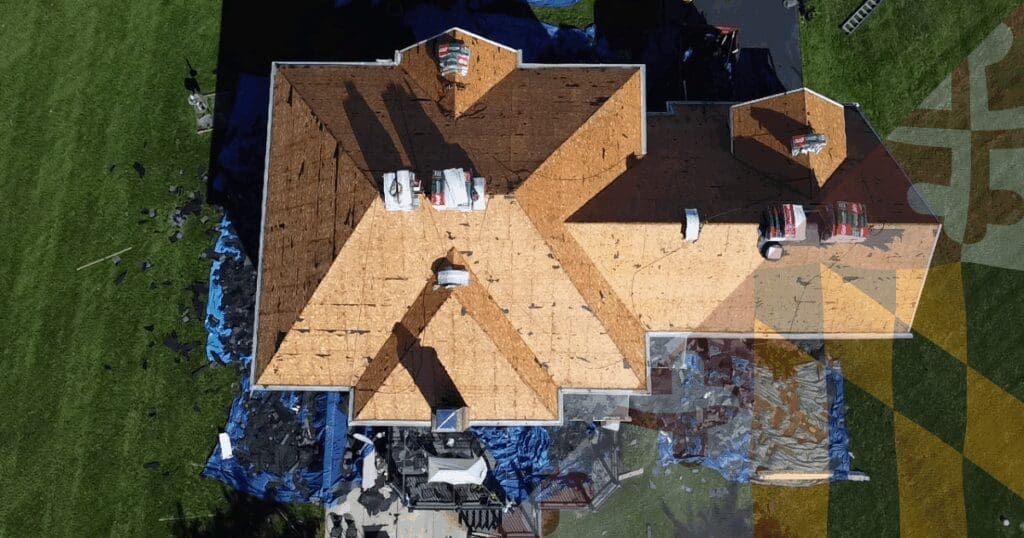
The shingles merely represent the outermost armor. The true structural danger lies beneath the surface. Unmitigated heat systematically destroys the wooden foundation of your exterior envelope.
Delamination and Rot
Modern roof decking consists of engineered plywood or Oriented Strand Board (OSB). Manufacturers compress wood fibers using high-strength industrial glues. Superheated attic air relentlessly cooks this wood. The intense heat breaks down the chemical bonds holding the panels together. The wood literally delaminates and separates into fragile layers. Consequently, the decking loses its load-bearing capacity.
The Sagging Roofline
Walk across your property and inspect the roofline. Does it look perfectly straight, or does it dip between the trusses? A wavy or sagging appearance indicates severe decking failure. Heat-compromised plywood cannot support the immense dead weight of asphalt shingles. We frequently discover completely pulverized wood during summer tear-offs. Our crews must replace the entire decking system before installing new underlayment.
Voided Manufacturer Warranties
Homeowners often incorrectly assume their lifetime warranty covers heat damage. This represents a massive, expensive misconception. Shingle manufacturers employ strict installation protocols.
The Fine Print of Heat Damage
Major manufacturers like CertainTeed and GAF mandate specific ventilation requirements. They mathematically calculate the required Net Free Area (NFA) for attic airflow. Transient contractors routinely ignore these rigid formulas. The manufacturer will dispatch an independent inspector when your shingles prematurely fail. They will immediately void the warranty upon discovering inadequate ventilation. You will face a massive replacement bill with zero financial recourse.
Demand Proper Diagnostics
Therefore, you must demand localized, verified execution. You cannot trust out-of-state salespeople who lack technical building code knowledge. Protect your investment by hiring deeply established experts. We actively enforce strict manufacturer guidelines on every single project. Our meticulous documentation ensures your warranty remains permanently intact.
The 140-Year Local Diagnostic Advantage
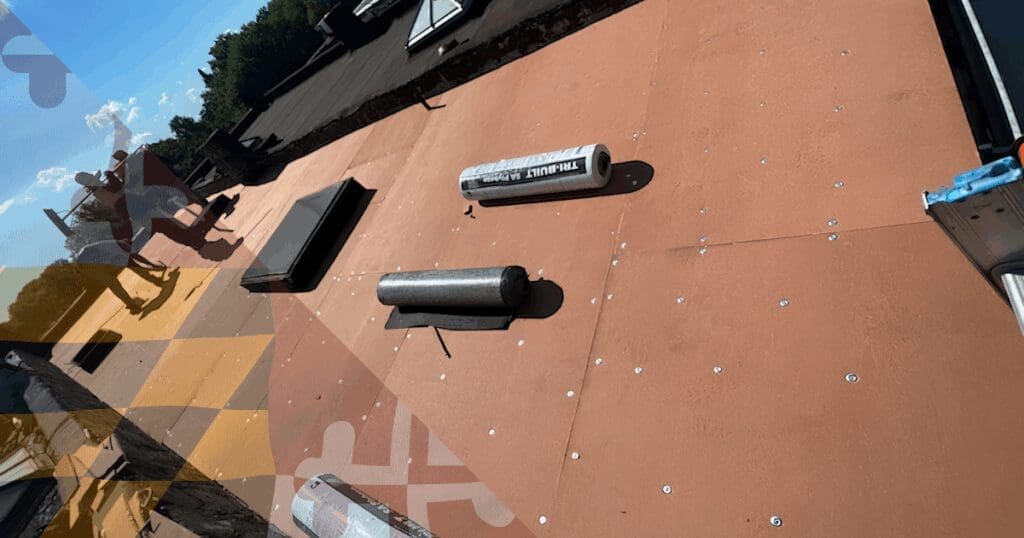
We completely reject guesswork when evaluating heat damage. A transient contractor might glance at curled shingles and guess. Conversely, our Baltimore County-based diagnostic teams execute rigorous structural audits that leave no room for interpretation.
Uncompromising Regional Accountability
Our family has served this exact region since 1885. Therefore, we intimately understand how Maryland temperature swings destroy improper installations. We proudly maintain our home base in Baltimore County, providing immediate response to the surrounding communities. Whether we are dispatching diagnostic teams to severe thermal shock responses in Columbia or managing complex replacements in Silver Spring and Gaithersburg, we deliver uncompromising regional accountability.
Navigating Historic Baltimore City
Moreover, extreme heat poses unique challenges to the specialized architecture found in historic Baltimore City. Century-old rowhomes often lack modern ventilation infrastructure entirely. Repairing these structures requires specialized knowledge of flat roof ponding, parapet walls, and historical preservation guidelines. We routinely execute high-level restorations across Baltimore City, ensuring that classic architecture seamlessly integrates with modern thermal protection standards.
Rigorous Structural Audits
Technicians physically measure your attic temperature gradients. Inspectors verify the structural integrity of your underlayment and chimney saddles. Our team provides unedited photographic evidence of thermal cracking and granule loss. We give you the absolute truth regarding your exterior envelope. This empowers you to make a calm, calculated financial decision.
Secure Your Exterior Envelope Today
Do not wait for a collapsed ceiling to address ventilation failures. Heat damage works silently until a violent thunderstorm exposes the weakened shingles. You must act aggressively to protect your real estate equity.
Did your property in Fallston or Aberdeen sustain severe summer heat exposure? Contact Baltimore Roofing & Remodeling immediately. Our specialists will fiercely hunt down hidden ventilation vulnerabilities. Let our experts upgrade your exterior envelope before the next heatwave strikes. Explore our comprehensive Roofing Services to secure your property today.

Frequently Asked Questions: Summer Heat Damage
How hot does a poorly ventilated attic actually get?
A poorly ventilated attic frequently reaches temperatures exceeding 150 degrees Fahrenheit. Ambient outside temperatures might only read 90 degrees. However, the enclosed space traps the solar radiation. This massive heat buildup actively destroys shingles and structural decking.
Can I just add a power fan to fix my hot attic?
Adding a power fan without calculating the intake ratio causes massive problems. A powerful exhaust fan will literally suck air-conditioned air out of your living room if the soffit intake is blocked. You must balance the entire system. Our experts meticulously calculate the necessary intake-to-exhaust ratio.
Does homeowners insurance cover heat-blistered shingles?
Insurance policies rarely cover damage caused by poor ventilation or gradual heat blistering. Carriers classify this as a maintenance failure rather than a sudden storm event. You remain completely financially responsible for the replacement costs. Therefore, proactive ventilation maintenance is critical.
How do I know if my roof has proper ventilation?
Walk outside and look under your eaves for continuous soffit vents. Look at the peak of your house for a continuous ridge vent. Contact our diagnostic team immediately if you only see solid wood under your eaves. We will execute a comprehensive airflow analysis.
