The Science of Baltimore Attic Condensation: Why It’s Damp (and It’s Not a Roof Leak)
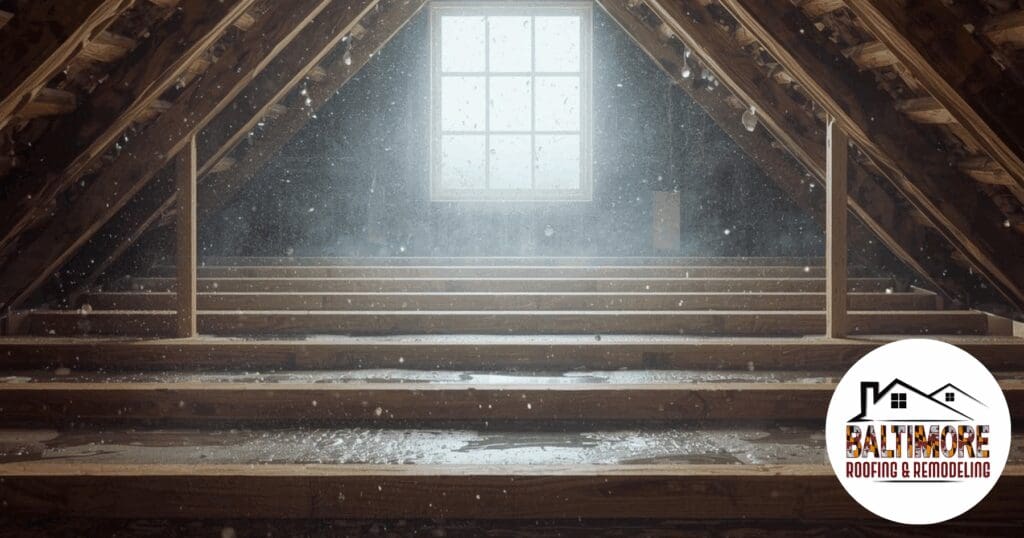
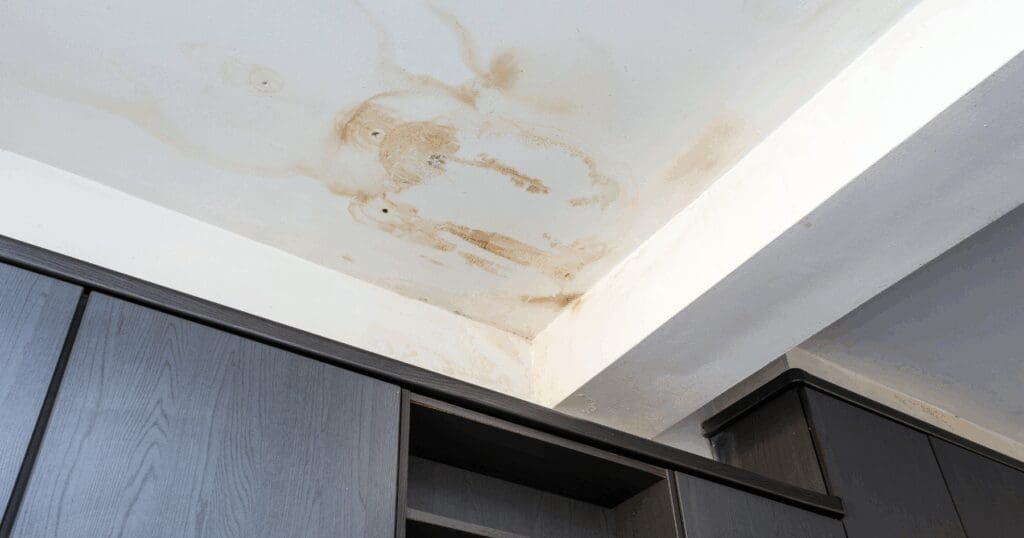
It is January in Baltimore. The heating bills are up, the temperatures are down, and you have just discovered a terrifying sight: a damp, dark water spot spreading across your upstairs ceiling. Or perhaps you climbed into the attic to grab holiday decorations and found the underside of your roof deck glistening with water droplets, looking like the inside of a terrified cave.
Your first instinct is to panic. You assume your roof has failed. You assume a shingle has blown off during that last Nor’easter, or that your flashing has finally given up the ghost. You pick up the phone to call a roofer, ready to pay for an emergency repair.
Stop.
Before you authorize a tear-off or a patch job, you need to understand the invisible physics happening above your head. In the dead of winter, especially in the humid Mid-Atlantic climate, the water in your attic is frequently not coming from the sky outside. It is coming from the shower you took this morning. It is coming from your boiling pasta water. It is coming from you.
This is the phenomenon of attic condensation Baltimore homeowners face every winter. It is a “false leak” that causes real damage. Understanding the difference between a structural failure and a ventilation failure — or calling a certified expert like Baltimore Roofing & Remodeling — can save you thousands of dollars in unnecessary roof repairs — and help you target the actual problem before mold in the attic destroys your home’s value.



The Physics of the “Sweating” Roof
To understand internal roof moisture, examine the relationship between temperature and moisture.
Your home is an ecosystem. Inside the living space, you generate a massive amount of moisture. A family of four produces 2-3 gallons of water vapor every single day through cooking, cleaning, breathing, and bathing. Warm air acts like a sponge; it holds this moisture comfortably.
However, thanks to a principle called the “Stack Effect,” this warm, moist air does not stay put. Hot air rises. It pushes up through your ceiling light fixtures, your attic hatch, and the gaps around your plumbing pipes, migrating into your attic.
The Collision Course
In the summer, this isn’t a major visual issue because the attic is hot. But in January, your roof deck (the plywood or OSB sheathing that holds your shingles) is freezing cold. It is the same temperature as the outside air.
When that warm, moisture-laden air from your bathroom hits the freezing cold underside of your roof deck, it undergoes a phase change. The air cools rapidly, losing its ability to hold water. The vapor condenses instantly into liquid water.
Think of a cold soda can on a hot July day. The can isn’t leaking; the air around it is sweating. Your roof is the soda can.
Why Baltimore is Ground Zero
This problem strikes our region aggressively. Baltimore winters bring constant wetness and cycle frequently around the freeze-thaw point. High relative humidity persists even in January, guaranteeing attic condensation. Unlike the Midwest’s dry cold, our air holds full saturation. When internal household moisture compounds this humid environment, your attic hits its “dew point” rapidly.
Diagnosis: Is it a Leak or Condensation?
Distinguishing between a roof leak and condensation is critical. If you hire a roofer to patch a “leak” that is actually condensation, the water will return the very next time the temperature drops, and you will have wasted your money.
Here is how to tell the difference.
1. The “All-Over” Test
- Roof Leak: A structural leak is usually localized. You will see water damage in a specific area, often trailing down from a chimney, a pipe boot, or a valley.
- Condensation: This issue is systemic. If you look up and see the entire underside of the North-facing roof slope is damp, or if the nail heads everywhere are frosted, that is condensation. Leaks rarely happen everywhere at once.
2. The “Rusty Nail” (Shiner) Syndrome
Look at the nails poking through the roof deck. In a condensation scenario, the metal nails are the coldest part of the roof. They conduct the outside cold straight in.
- The Sign: If every nail has a little ball of ice or a droplet of water hanging from it, you have a ventilation issue, not a roof failure. These are often called “weeping shiners.” When the sun hits the roof and warms it up, these thousands of ice balls melt, “raining” onto your insulation.
3. The Pattern of Dampness
- Roof Leak: Structural leaks remain localized. Water damage manifests in a specific area, often originating from a chimney, pipe boot, or valley.
- Condensation: This issue spans the entire system. If dampness soaks the full underside of the North-facing slope, or frost caps every nail head, condensation causes the problem. Leaks rarely occur everywhere simultaneously.
4. Weather Correlation
- Roof Leak: Happens during or immediately after a rainstorm or snowmelt.
- Condensation: Happens when it is extremely cold, regardless of whether it is raining. Finding moisture in your attic during sunny, dry, 20°F weather confirms condensation, not a leak.
If you are seeing signs of external damage, like missing shingles, then you might have a true leak. You can cross-reference your findings with our guide on storm damage roof repairs in Baltimore. However, if the roof looks perfect from the street but is wet inside, read on.
The Root Causes: Why Is Your Attic So Wet?
If the roof isn’t leaking, why is the moisture trapped there? It comes down to a failure of the home’s “respiratory system.”
1. Bathroom Fans Venting into “Nowhere”
This is the single most common code violation we see in older Baltimore homes. A bathroom exhaust fan’s job is to remove humid air from the shower.
- The Error: In many homes, the fan sucks the air out of the bathroom and just dumps it into the attic space.
- The Result: You are literally pumping gallons of water directly onto your freezing roof deck. The fan must vent all the way to the exterior, through a dedicated roof cap or gable vent.
2. Blocked Intake Vents (The Insulation Mistake)
Your attic needs to breathe. It relies on a flow of cool air entering at the bottom (soffit vents) and exiting at the top (ridge vents).
- The Error: When homeowners add new insulation to save energy, they often accidentally shove the fiberglass batts all the way into the corners (the eaves), covering the soffit vents.
- The Result: The attic chokes. Fresh, dry air cannot enter to flush out the moisture. The humid air stagnates and condenses.
3. Air Leaks in the Ceiling Plane
Your ceiling is not airtight. Recessed lights (can lights), attic hatches, and gaps around HVAC ducts act as chimneys for your warm indoor air. If these aren’t sealed with spray foam or caulk, your furnace is essentially heating your attic, contributing to the moisture load.
The Consequences: Why You Can’t Ignore Damp Insulation Symptoms
You might be tempted to put a bucket under the drip and wait for spring. This is a mistake. Condensation is insidious because it attacks the structure of your home from the inside out.
1. Mold in Attic
Mold loves three things: food (wood), optimal temperatures, and moisture. A condensation-filled attic is a buffet for black mold. Once mold colonies establish themselves on your plywood sheathing, remediation can cost thousands of dollars. In severe cases, the sheathing must be completely ripped off and replaced — a full roof replacement caused by bad air, not bad shingles.
2. Ruined Insulation (The R-Value Drop)
Fiberglass insulation works by trapping pockets of air. When it gets wet, it collapses. Damp insulation symptoms include matting, discoloration, and a heavy, sodden texture.
- The Cost: Wet insulation loses its R-value (insulating power). You are paying to heat your house, but the heat is escaping through the wet, conductive insulation, which makes the attic warmer, which creates more condensation. It is a feedback loop of destruction.
3. Structural Rot
Over years, consistent condensation will delaminate the plywood. The glues holding the wood layers together fail. The roof deck becomes spongy. If you walk on it during an inspection, you could put your foot through it.
For a deeper dive on how structural rot impacts different roof types, specifically flat roofs which are prone to moisture trapping, read Flat Roof Repair vs. Replacement in Baltimore: Essential Decisions for Your Rowhouse.
The Solution: Balancing the Equation
Fixing issues with attic condensation in Baltimore requires a two-pronged approach: Stop the moisture from entering, and flush out the moisture that gets in.
Step 1: Seal the Floor (The Vapor Barrier)
You must stop the warm air from migrating upstairs.
- Air Sealing: Use expanding foam to seal around every wire penetration, light fixture, and plumbing stack that enters the attic.
- Hatch Treatment: Install a weather-stripped, insulated cover box over your attic stairs or hatch. This is often the biggest “leak” in the house.
- Bathroom Fans: Verify that every fan vents to the outside. If yours dumps into the attic, hire a pro to install an insulated duct and a roof jack immediately.
Step 2: Roof Ventilation Solutions
You need to wash the underside of the roof deck with cold, outside air. This keeps the wood temperature closer to the outside temperature (reducing the shock of contact) and carries water vapor away before it can stick.
- Intake is King: You cannot have too much intake ventilation. Ensure your soffit vents are clear. If you have a rowhome without eaves, you may need “SmartVents” or a fascia-vent system that allows air to enter at the gutter line.
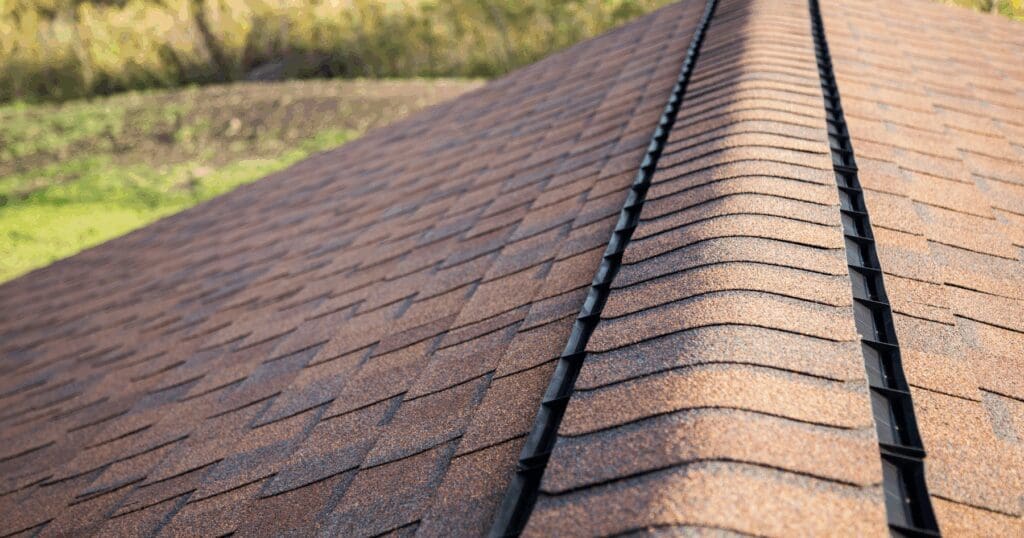
- The Ridge Vent: The most efficient exhaust is a continuous ridge vent at the peak of the roof. It uses the natural buoyancy of warm air to let it escape.
- The Balance: You must have a balanced system. If you have a ridge vent but no intake vents, the ridge vent will act like a vacuum, sucking conditioned air out of your house and pulling more moisture into the attic.
If you are unsure about the current state of your ventilation system, this is part of what we check during a standard assessment. See The Essential Guide to Residential Roof Inspections in Baltimore for details on our process.
Special Case: Condensation on Flat Roofs
Baltimore city rowhomes face a unique challenge. Flat roofs (low-slope roofs) often do not have “attics” in the traditional sense. They have a small cavity between the ceiling drywall and the roof deck.
In these “hot roof” or compact assemblies, ventilation is difficult or impossible.
- The Danger: If moisture gets into this cavity, it has nowhere to go. It rots the joists silently.
- The Fix: Modern flat roofs often use rigid foam insulation on top of the roof deck (under the membrane) rather than fluffy insulation between the joists. This keeps the roof deck warm, preventing the condensation point from ever being reached.
- Maintenance: Keeping the drains clear is also vital to prevent standing water from cooling the roof surface. Learn more in Commercial Roof Maintenance in Baltimore: Essential Tips for Longevity.
Winter Humidity Management
Sometimes, the fix isn’t on the roof; it’s in your lifestyle.
- Humidifiers: If you run a humidifier in winter, check the setting. If it is set above 35-40%, you are pumping too much water into the air. If you see condensation on your windows, you definitely have condensation in your attic.
- Dryers: Ensure your clothes dryer vent is not clogged or disconnected, venting hot wet air into the walls or crawlspaces.
Summary: Don’t Shoot the Messenger (The Roof)
It is easy to blame the shingles when you see water. But in the winter, the call is coming from inside the house.
Attic condensation in Baltimore is a building science failure, not a roofing material failure. The good news is that it is solvable. By improving your roof ventilation solutions, air-sealing your ceiling plane, and managing indoor humidity, you can dry out your attic and protect your home from rot and mold.
Do not let a “false leak” rot your home from the inside out.
If you are seeing water spots, damp insulation, or “weeping nails,” you need a professional diagnosis, not a guessing game. A roofer who doesn’t understand ventilation will sell you a patch you don’t need.
Contact Baltimore Roofing & Remodeling today. We don’t just look at the shingles; we analyze the entire system — intake, exhaust, and insulation — to ensure your home is healthy, dry, and secure for the rest of the winter.